
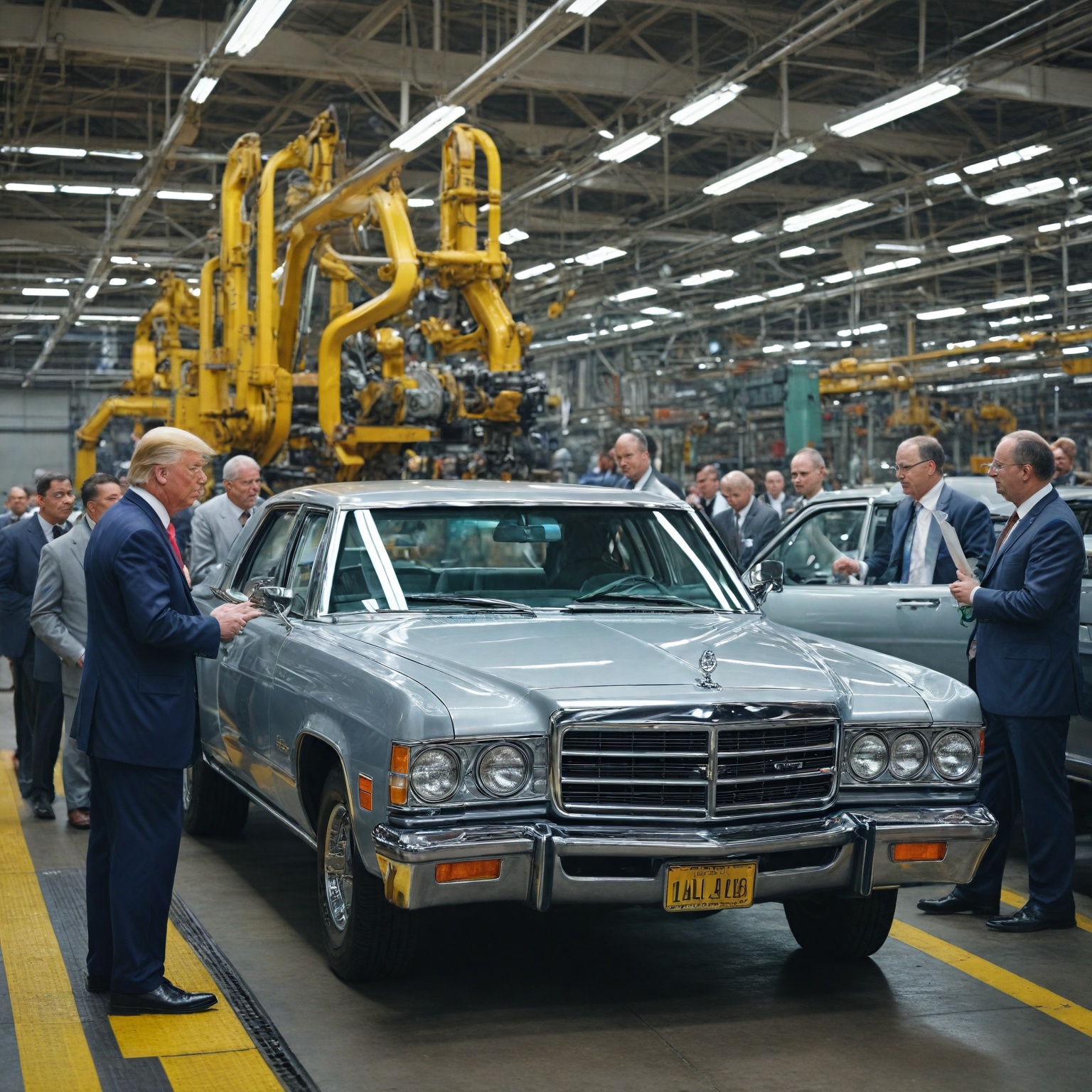
Highlights:
– The executive order eased tariffs on imported automobiles and auto parts, aiming to mitigate disruptions to supply chains, lower vehicle prices for consumers, and facilitate production for automakers.
– By exempting specific vehicles meeting domestic content thresholds from tariffs and introducing credit mechanisms, the order provided targeted relief to manufacturers while emphasizing the temporary nature of the measures to spur the restructuring of supply chains and increase U.S. content.
– The complex balancing act behind easing some auto tariffs underscored the administration’s attempt to protect national security interests while addressing economic disruptions, reflecting ongoing challenges in applying protectionist policies to a globally integrated industry.
Summary
The Trump administration’s executive order easing certain tariffs on imported automobiles and auto parts marked a significant shift in U.S. trade policy toward the automotive sector. Initially imposed in 2018 under Section 232 of the Trade Expansion Act of 1962, a 25 percent tariff aimed to protect domestic manufacturing by addressing national security concerns related to reliance on foreign vehicle imports. However, the broad application of these tariffs threatened to disrupt integrated North American supply chains, increase vehicle prices for consumers, and complicate production and servicing for automakers and dealers. In response to intense industry lobbying and economic concerns, President Donald Trump signed the order on April 1, 2019, providing targeted relief by exempting vehicles meeting specific domestic content thresholds from the tariffs and introducing credit mechanisms to ease the burden on manufacturers.
The executive order allowed automakers to import certain auto parts duty-free up to a specified percentage of the sticker price of domestically assembled vehicles, thereby granting companies additional time to restructure supply chains and increase U.S. content. It also prevented the “stacking” of tariffs by excluding steel and aluminum imports used in auto manufacturing from multiple levies, aiming to reduce compounded costs. Despite these concessions, tariffs on steel and aluminum remained in place, and the administration emphasized the temporary nature of the relief, warning that tariffs would be reinstated if domestic production targets were not met.
The rationale behind easing some auto tariffs was a complex balancing act between protecting national security by preserving the domestic manufacturing base and mitigating the economic disruptions caused by the tariffs’ broad application. While industry leaders cautiously welcomed the relief measures, many argued they were insufficient to fully stabilize the sector, citing ongoing risks of increased costs, reduced sales, and supply chain complications. Labor organizations generally supported the tariffs as a means to revitalize American manufacturing jobs, though concerns persisted over potential retaliatory trade actions from foreign governments that could harm U.S. exports.
Legally grounded in multiple statutory authorities, including the Trade Expansion Act and the International Emergency Economic Powers Act, the executive order reflected the administration’s effort to maintain leverage over trade partners while addressing unintended economic consequences of the initial tariffs. The policy highlighted the challenges of applying protectionist measures to a globally integrated industry and underscored the ongoing tensions between national security objectives and economic realities in U.S. trade policy.
Background
In 2018, the Trump administration imposed a 25 percent tariff on imported vehicles and auto parts, aiming to protect and incentivize domestic manufacturing in the United States. These tariffs were part of a broader trade policy approach that also included levies on steel and aluminum imports. The tariffs applied both to fully assembled vehicles shipped into the U.S. and to imported parts used in domestic assembly plants, disrupting the established global automotive supply chain.
The automotive industry, particularly in North America, had long relied on integrated supply chains under trade agreements such as the United States-Mexico-Canada Agreement (USMCA). These agreements enabled manufacturers to source parts from various countries without facing significant tariffs. The introduction of the 25 percent tariffs threatened this system by raising costs for automakers and suppliers and increasing prices for consumers. Industry leaders warned that these measures would scramble supply chains, lead to higher vehicle prices, reduce dealership sales, and complicate vehicle servicing and repairs.
Recognizing the potential negative impacts, the Trump administration introduced measures to ease the burden of these tariffs on automakers. This included offering credits for domestically assembled vehicles, allowing companies to apply these credits against the value of imported parts. Specifically, automakers could import duty-free parts worth up to 3.75 percent of the sticker price of domestically produced cars in the first year, decreasing to 2.5 percent in the second year. These changes were intended to provide manufacturers with time to bring supply chains back to the U.S. and to encourage investment in domestic production capabilities.
Despite these efforts, tariffs on steel and aluminum remained in place, affecting suppliers and indirectly increasing costs for automakers. While the executive order provided a temporary reprieve for companies meeting certain compliance thresholds—such as producing cars with at least 85 percent of parts complying with USMCA rules—Trump emphasized that this was a short-term measure, warning that companies needed to increase domestic production or face stricter consequences.
Executive Order Details
On April 1, 2019, President Donald J. Trump signed an executive order easing certain tariffs on imported automobiles and automobile parts initially imposed under Section 232 of the Trade Expansion Act of 1962. This decision came after intense lobbying from a coalition of U.S. and international automakers who warned that the tariffs would disrupt the global automotive supply chain, raise vehicle prices for consumers, reduce dealership sales, and increase the cost and complexity of vehicle servicing and repairs.
The executive order effectively exempts vehicles containing at least 85% U.S.-Mexico-Canada Agreement (USMCA)-compliant parts and produced domestically from the 25% tariff. This exemption allows automakers additional time to re-shore manufacturing and increase domestic content, with President Trump emphasizing the temporary nature of the relief and warning that tariffs would be reinstated if companies fail to meet the requirements.
To mitigate the economic impact, the administration introduced a system of credits for automakers, allowing them to apply credits worth up to 15% of the value of vehicles assembled domestically against the cost of imported parts subject to tariffs. These credits translate to duty-free imports of parts amounting to approximately 3.75% of the sticker price of domestically produced cars in the first year, declining to 2.5% in the second year before the full tariff resumes. Additionally, the administration committed to reimbursing automakers for some tariff costs on imported components, phased out over two years, to ease the transition.
The order also prevents the “stacking” of tariffs by excluding steel and aluminum imports used in automobile manufacturing from additional levies, ensuring that automakers are not taxed multiple times on critical materials. White House officials described the measure as a balance between protecting American workers and providing flexibility to the automotive industry to adjust supply chains and production practices without severe disruption.
This executive action followed a formal investigation into the impact of imported vehicles and parts on U.S. national security, which initially justified the tariffs. However, subsequent consultations with industry leaders and economic advisors highlighted the need for calibrated relief to maintain production and employment in the U.S. auto sector. The administration continues to monitor compliance and signaled that the tariffs could be reinstated if domestic content thresholds are not met within the allotted timeframe.
Rationale and Objectives
The Trump administration’s decision to ease certain auto tariffs was primarily driven by widespread concerns from automakers and industry leaders regarding the negative impact of steep import levies on U.S. production and employment. Senior Commerce Department officials revealed that multiple CEOs had communicated to President Trump that the tariffs would hinder manufacturing and hiring within the United States. The automotive sector, including both carmakers and dealers, lobbied extensively for relief, warning that the import taxes would increase costs for American consumers and disrupt already fragile supply chains.
The administration framed the tariffs as necessary to protect national security by preserving the domestic manufacturing base, which it viewed as weakened by reliance on foreign imports. According to senior White House advisors, foreign trade practices had transformed America into a lower-wage assembly hub for parts produced abroad, thereby eroding the defense and manufacturing industrial base critical to national security. Despite these national security concerns, the administration acknowledged the evolving economic implications of the tariffs and sought to maintain flexibility in policy implementation to mitigate unintended consequences.
The overarching objective of the tariff adjustments was to prevent circumvention and uphold the intended security goals while addressing the economic realities faced by the industry. This included establishing processes to identify and apply tariffs on additional automobile parts as necessary to protect U.S. interests. However, the global nature of the auto industry and integrated supply chains, especially within North America under longstanding trade agreements, complicated these efforts. The sector’s interdependence across borders meant that tariffs could have cascading effects, raising costs and provoking retaliatory trade measures that risked further economic disruption.
Automakers expressed cautious optimism about the tariff relief, with leaders acknowledging the measures as welcome but insufficient for fully stabilizing the industry. They urged the administration to foster a pro-growth regulatory environment that supports the long-term viability of U.S. manufacturing. Ultimately, the rationale behind easing some auto tariffs reflected a balancing act between safeguarding national security interests and reducing economic burdens on manufacturers, suppliers, and consumers within a complex and interconnected global market.
Reactions and Responses
The decision by the Trump administration to ease some auto tariffs elicited a range of reactions from industry leaders, policymakers, and trade groups. Automakers generally welcomed the partial relaxation, acknowledging the economic challenges the initial steep tariffs had introduced. General Motors’ CEO Mary Barra expressed gratitude for the administration’s support of the U.S. automotive industry and the millions of Americans it employs, while also cautioning about the uncertain financial outlook, leading GM to reassess its profit guidance for 2025. Similarly, the Alliance for Automotive Innovation, representing major automakers, along with five other top industry groups, jointly lobbied against the tariffs on auto parts, underscoring concerns over supply chain disruptions and increased costs.
Industry analysts warned that even with the concessions, the tariffs would raise car prices by thousands of dollars, potentially dampening sales and threatening the financial stability of automakers and their suppliers. The global nature of the auto industry, particularly in North America, where production has been integrated through decades of trade agreements, made the tariffs especially disruptive. Executives highlighted the risk that tariffs on parts would scramble the global supply chain, increase costs for consumers, and complicate vehicle servicing and repairs.
Reactions among labor organizations were more supportive. Shawn Fain, president of the United Auto Workers union, praised the tariffs as a means to end what he called the “free-trade disaster” that had harmed working-class communities for decades. The administration framed the tariffs as vital for protecting national security and restoring American manufacturing competitiveness, with senior officials emphasizing that foreign trade practices had eroded the U.S. industrial base and defense readiness.
However, concerns were also raised about possible retaliatory measures from foreign countries, which could target American exports including vehicles and agricultural products, potentially escalating trade conflicts. Automakers like Audi and Volkswagen noted the impact of the tariffs but continued to manage their U.S. operations, identifying certain imported models exempt from added fees to mitigate the effect on dealerships and consumers.
Economic Impact
A 2024 study evaluating the effects of President Trump’s tariffs during his first term concluded that the measures “strengthened the U.S. economy” and prompted significant reshoring in key industries such as manufacturing and steel production. However, the imposition of steep tariffs, particularly on the automotive sector, introduced economic challenges and uncertainty for American companies.
In response, adjustments to the original 25% vehicle tariffs included provisions allowing auto companies to receive credits of up to 15% of the value of vehicles assembled domestically. These credits could be applied against the value of imported parts, effectively permitting duty-free imports of parts worth approximately 3.75% of the sticker price of domestically produced vehicles in the first year, and 2.5% in the second year. This measure was designed to provide automakers with time to restructure supply chains toward more domestic content.
Despite these concessions, concerns persisted regarding the global nature of the auto industry, which has long depended on trade agreements enabling specialization and tariff-free exchanges between factories in different countries, especially within North America since the 1960s. The additional costs imposed by tariffs risked squeezing profits, slowing sales, and provoking retaliatory trade actions against American exports, including cars and agricultural products.
Supporters of the tariffs argued that foreign trade practices had transformed the U.S. into a “lower-wage assembly operation for foreign parts,” thereby undermining national security by eroding the domestic defense and manufacturing industrial base. Nonetheless, the economic impact of the tariffs revealed a complex balance between encouraging domestic production and managing the integrated global supply chains critical to the auto industry’s viability.
Legal and Political Implications
The executive order signed by President Donald J. Trump to ease some auto tariffs was grounded in multiple statutory authorities, including the International Emergency Economic Powers Act (IEEPA), the National Emergencies Act (NEA), the Trade Act of 1974, and the Trade Expansion Act of 1962. These laws collectively empowered the President to impose tariffs as a response to national security threats posed by imports of automobiles and certain auto parts, particularly when faced with issues such as lack of reciprocity in trade relationships and non-tariff barriers.
The order included provisions allowing for modification of tariff levels depending on the behavior of trading partners, enabling increases if retaliatory tariffs were imposed or decreases if partners took remedial steps to align with U.S. economic and security interests.
Politically, the decision to reduce the scope of the tariffs was viewed as a response to growing challenges and economic uncertainty faced by American companies, especially automakers, resulting from the initial broad levies. Despite the concessions, analysts warned that the tariffs would still increase car prices and threaten the financial stability of domestic manufacturers and their suppliers. The tariffs aimed to protect and strengthen the U.S. manufacturing sector, ensuring the sustainability of the domestic industrial base critical to national security. Importers under trade agreements such as the United States-Mexico-Canada Agreement (USMCA) were allowed to certify U.S. content to limit tariff application to non-U.S. value, reflecting an attempt to balance protectionist measures with trade facilitation.
To prevent compounding costs, the tariffs were structured so they would not be “stacked” with other tariffs, such as those on steel and aluminum, thereby exempting automakers from paying multiple levies on the same materials. However, the tariffs provoked significant opposition from key stakeholders in the U.S. automotive industry. For the first time, major policy groups representing automakers, suppliers, and franchised dealers united to lobby the administration against the tariffs, warning that these measures could jeopardize the viability of the domestic auto sector.
Economically, concerns were raised that the tariffs could backfire by increasing costs for U.S. automakers, squeezing profits, slowing sales, and potentially inviting retaliatory measures from trade partners, which could include tariffs on American exports like agricultural products and vehicles. From a national security perspective, officials such as Peter Navarro argued that foreign trade practices had transformed the U.S. into a low-wage assembly hub reliant on foreign parts, thereby eroding the defense and manufacturing industrial base crucial to national security. Thus, the legal and political implications of the order reflected a complex balance between protecting domestic industries, navigating international trade relations, and addressing broader economic and security concerns.
Related Policies and Subsequent Developments
The Trump administration’s decision to ease certain auto tariffs came amid growing concerns over the economic impact of previously imposed levies. While the executive order reduced the scope of reciprocal tariffs on automobiles and parts, significant duties remained in place, including 25% tariffs on steel, aluminum, and imported vehicles. This reduction aimed to alleviate some pressure on American automakers and suppliers who had been facing challenges due to the “stacking” effect of multiple tariffs.
President Trump retained modification authority under the International Emergency Economic Powers Act (IEEPA), allowing adjustments to tariff rates depending on trading partners’ actions to address non-reciprocal trade practices and align on economic and national security issues. Notably, certain goods were exempted from reciprocal tariffs, including steel, aluminum, autos, auto parts, copper, pharmaceuticals, semiconductors, lumber, bullion, energy, and other minerals not available domestically.
Automakers and industry groups had lobbied extensively for tariff relief, particularly to prevent the compounding of duties on metals and finished vehicles, which threatened to raise car prices by thousands of dollars and endanger the financial health of the sector. In response, the administration clarified that tariffs on autos would not be “stacked” with steel and aluminum tariffs, thereby preventing double tariffs on the same products.
Legislative and trade agreements such as the United States-Mexico-Canada Agreement (USMCA) and revisions to the U.S.-Korea Free Trade Agreement played a role in the broader context of these policies. Despite these efforts, the administration justified the tariffs
The content is provided by Sierra Knightley, Anchor Press