
Summary
The Google antitrust case, instigated by the Biden administration in 2023, accused the tech giant of monopolizing the AdTech space, marking a resurgence in antitrust lawsuits against major technology companies. The trial highlighted Google’s alleged anticompetitive practices under the Sherman Act and has been a focus of investigations by the United States Department of Justice (DOJ) and the Federal Trade Commission (FTC). This case was particularly significant due to the lack of clear proof required to establish antitrust causation. Google’s partial loss in this case, along with its history of antitrust charges in the European Union, underscored concerns about potential anticompetitive practices in the tech industry.
The lawsuit claimed Google illegally monopolized the advertising technology market, an alleged violation of the Sherman Antitrust Act of 1890. Critics, however, argued that demands for breaking up Google overlooked the actual issues at hand and failed to consider the company’s contributions to innovation and investment. The court ruled Google had abused its monopoly power in the publisher-side adtech, but the judge’s interpretation undermined a key theoretical rationale for relaxing causation standards.
The case’s outcome could have broad implications for other Big Tech companies, such as Amazon and Meta, setting legal precedents for future antitrust cases. Depending on specific penalties and restrictions, a forced divestiture could have significant impacts on Google’s future investments and the wider tech industry. The case has also sparked controversy, with critics arguing that the ruling may negatively impact American innovators and set a worrisome precedent.
Aside from Google, other major tech companies, including Amazon and Apple, are also facing ongoing antitrust cases, reflecting a growing global concern over potential anticompetitive practices within the tech industry. The verdict serves as a reminder that Big Tech companies are not above the law, and could potentially prompt tech corporations to reconsider their business practices.
Background of the Antitrust Case
Antitrust lawsuits, after being relatively dormant for many years, have recently regained prominence. In particular, the actions of large technology companies have come under scrutiny, with legal efforts underway to curtail what is perceived as their anticompetitive conduct under section 2 of the Sherman Act. Notably, tech giant Google has found itself a frequent subject of these investigations.
The United States Department of Justice (DOJ) and Federal Trade Commission (FTC) have faced challenges in demonstrating that certain activities of these companies have resulted in anticompetitive harm. A key issue has been the lack of clarity over the required level of proof needed to establish causation.
One of the major antitrust cases against Google was instigated by the Biden administration in 2023. The lawsuit accused Google of monopolizing the AdTech space. Opening statements in the trial began on September 12, 2023, marking one of the first instances in recent history of a major tech company facing an antitrust lawsuit.
The case proceedings were punctuated by dramatic moments, including allegations that Google had intentionally destroyed incriminating evidence, echoing similar accusations made during Google’s previous antitrust trial. The plaintiffs’ efforts to substantiate these claims were supported by testimony from a former Google executive, Chris LaSala.
In addition to the American cases, Google has also been the subject of antitrust investigations by the European Union. These investigations have resulted in formal charges against Google related to Google Shopping, the Android operating system, and Google AdSense, leading to fines totaling over €8 billion.
In tandem with the Google trials, other major tech companies such as Amazon and Apple are also facing ongoing antitrust cases. These collective legal challenges reflect an increasingly global concern over potential anticompetitive practices within the tech industry.
Legal Proceedings
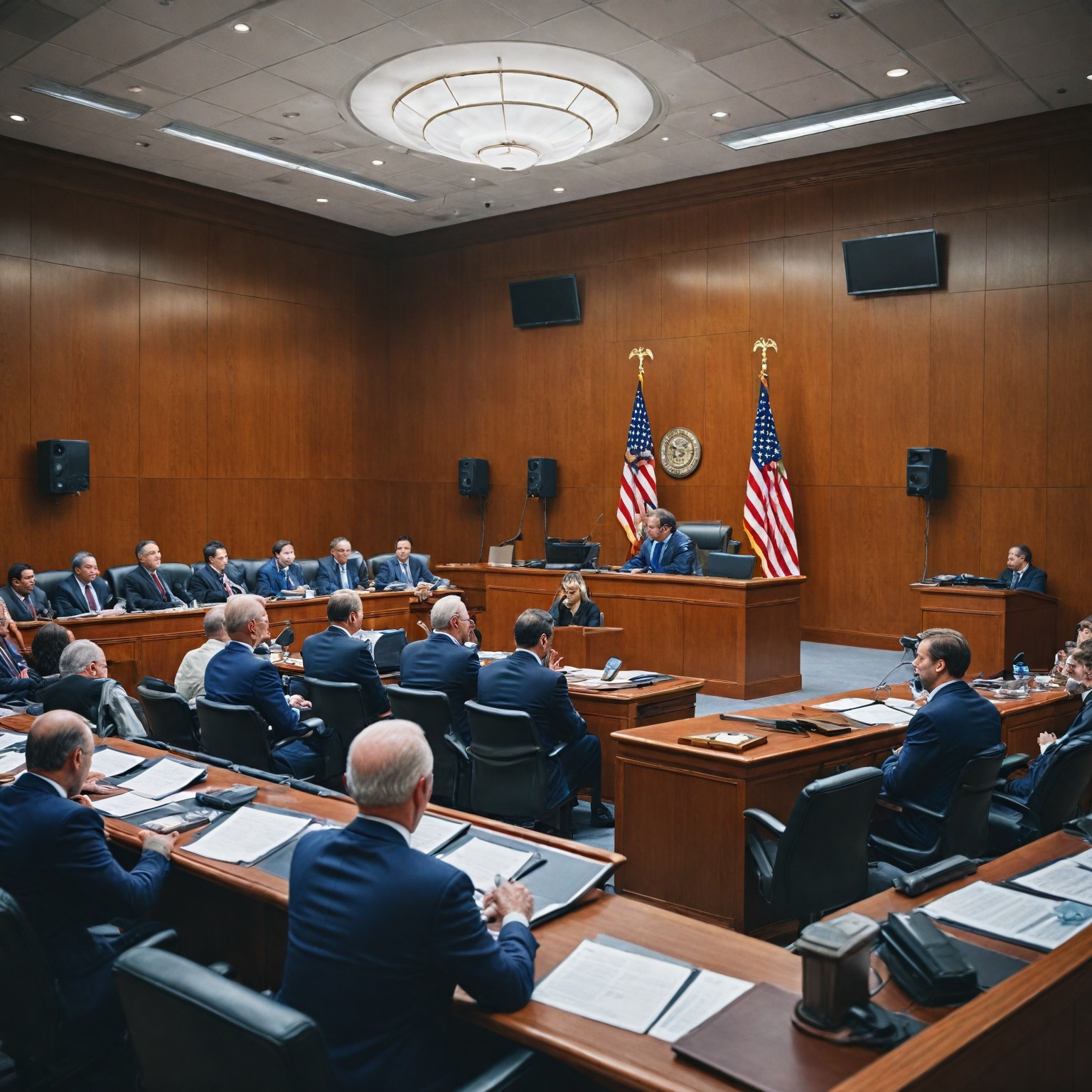
United States v. Google LLC is a federal antitrust case that began on January 24, 2023. The case was brought forth by the DOJ, in collaboration with Attorneys General from various states and the Commonwealth of Virginia. The suit accused Google LLC of illegally monopolizing the advertising technology (adtech) market, a violation of sections 1 and 2 of the Sherman Antitrust Act of 1890. This case has drawn parallels to another state-led antitrust lawsuit targeting Google’s adtech practices filed in 2020.
Specifically, the plaintiffs argued that Google was monopolizing key digital advertising technologies, collectively referred to as the “ad tech stack,” which website publishers heavily rely on for buying and selling ads capable of reaching millions of customers.
Evidence and Allegations
As part of their case, the prosecution attempted to demonstrate that Google had intentionally destroyed incriminating evidence. This issue had previously surfaced during Google’s initial antitrust trial. Chris LaSala, a former Google executive, testified on September 20 that Google’s chat messages had their history set to “off” by default and business executives often referred to conversations as “privileged and confidential”. The prosecution concluded its case shortly after this testimony, providing an opportunity for Google to mount its defense.
Opposition to the Case
Critics of the case argued that demands for breaking up Google ignore the actual issues at hand. They contended that Google has been wrongly accused of a severe violation of the law and that these criticisms overlook the judge’s consideration of the facts and law, as well as Google’s innovation and continuous investment in its products. They believe that antitrust remedies should be specific to any unfair practices that limit competition, with the goal of restoring a competitive market.
Court’s Ruling and Interpretation
The judge presiding over the antitrust case against Google agreed that the company violated the Sherman Act by monopolizing and unlawfully tying two parts of the adtech stack together, specifically DFP and AdX. The ruling confirmed that Google is guilty of abuse of monopoly power in the publisher-side adtech . However, Judge Mehta’s interpretation of the case seemed to undermine a key theoretical rationale for relaxing causation standards. His reasoning was particularly focused on the infeasibility of producing but-for evidence .
While Judge Mehta’s decision to apply a “reasonably capable” standard was in line with the concerns about insurmountable evidentiary barriers, he did not sufficiently demonstrate that these barriers justified forgoing a but-for requirement . Despite this, Google’s partial loss in the case underscored the company’s dominant position and its potential abuse, mirroring similar antitrust issues in the European Union .
In response to the court’s ruling, Google’s vice president of regulatory affairs, Lee-Anne Mulholland, stated, “We won half of this case and we will appeal the other half. The Court found that our advertiser tools and our acquisitions, such as DoubleClick, don’t harm competition” . However, the general idea in other antitrust cases is that the remedy has to be proportional. The broader the finding of illegality, the deeper the finding of deliberateness .
Impact of the Ruling
The ruling against Google, by a federal judge on Aug. 5, 2024, determined the company held an illegal monopoly on online search and advertising, marking a significant event in antitrust enforcement in the U.S. . This ruling could have broad implications for other Big Tech companies such as Amazon and Meta, setting a legal precedent for antitrust cases in the future .
Analysts have suggested the potential remedies could have a profound impact on the digital advertising landscape and the broader tech ecosystem . There’s a possibility that the ruling could lead to significant shifts in internet search engines, as well as consumers’ choices among Big Tech companies . It could also increase consumer awareness of the privacy policies of different search engines and impact the effectiveness of Google’s ad practices .
Further, the ruling is perceived as a warning to other tech companies against unfair competition practices, showing that they aren’t invincible in court . In addition to depriving rivals of the ability to compete, Google’s exclusionary conduct substantially harmed its publisher customers, the competitive process, and consumers of information on the open web .
Depending on the specific penalties, restrictions, or remedies for Google’s monopoly, a forced divestiture could have significant impacts. It could affect Google’s top-line enough to force it to recalibrate its spending on new areas of investment, such as its AI and cloud businesses . Increased competition as a result of a potential split of Google’s services could lead to lower prices for advertisers and faster innovation .
The Justice Department has asked for the divestiture of Google’s Chrome browser among other tough remedies that would amount to the harshest punishment for a tech company for antitrust violations in decades . This case, along with the company’s other antitrust challenges, has the potential to broadly reshape the internet landscape, weighing on Google’s parent company, Alphabet, as it scrambles for footholds in emerging fields against the likes of OpenAI and TikTok .
Broader Implications
The court ruling on Google’s anticompetitive practices is predicted to have significant implications for Big Tech companies and the advertising industry. The verdict serves as a reminder that these companies are not above the law, potentially prompting other tech corporations, such as Amazon and Meta, to reconsider their business practices. This increased visibility on antitrust cases could lead to an improved transparency between consumers and companies, as well as offering consumers more choice.
Google’s dominance in the publisher ad-server market, the ad-exchange market, and the advertiser ad-network market is under scrutiny in the Department of Justice’s (DOJ) case. These markets are critical to the adtech stack and the DOJ contends that Google’s control allows it to exert undue influence over the digital-advertising process. However, the complexities of the two-sided market, where pricing on one side can impact the other, and the fact that other advertising platforms exist, complicate the competitive-effects analysis.
This ruling could potentially affect Google’s investment strategy, particularly its allocations to new fields like AI and cloud businesses, given that its revenues from advertising could be impacted by a forced divestiture. Judge Mehta found that while Google does have an illegal monopoly in the advertising exchanges and ad servers markets, it doesn’t have such monopoly in the broader online display ads market.
Finally, the reactions to the ruling are mixed. Some view it as a necessary regulatory oversight to curtail anticompetitive practices, while others see it as a barrier to the procompetitive diffusion of high-quality technology. As antitrust agencies continue to examine tech companies, debates regarding the optimal standard for inferring anticompetitive harm from exclusive actions will likely persist.
Criticism and Controversy
The antitrust ruling against Google LLC has elicited a myriad of responses, and the decision has become a significant subject of controversy and debate. Central to the discourse is the interpretation of Google’s conduct and the implications of the court’s decision on the broader technology and digital advertising landscape.
On one hand, the court’s decision has been celebrated as a significant triumph for antitrust enforcement in the U.S, viewed as setting a critical precedent for how the government may address alleged monopolistic practices in the tech industry. This ruling was interpreted by some as a signal to large technology companies that the law would not be disregarded in cases of unfair competition. This sentiment was reflected in the DOJ’s claim of possessing adequate documentation to strengthen its case against Google.
On the other hand, Google’s defenders argue that calls for the company’s break-up overlook the specifics of the case. They contend that advocates for such a course of action presuppose that Google has grossly violated the law, neglecting to consider the judge’s assessment of the facts against the applicable law. They further argue that the company’s significant contributions to innovation and investment in its product should not be dismissed. The notion that the ruling may have far-reaching implications, potentially negatively impacting American innovators, has been raised as well. Google’s supporters express concerns that punishing the company for its success in a specific sector of the advertising ecosystem could set a worrisome precedent.
Furthermore, the controversy extended to the manner in which Google disclosed court documents, with accusations that the company was not sufficiently transparent. This led to heightened tensions within the ad tech ecosystem, exposing internal conflicts at Google and the challenges faced by its competitors.
Despite the range of criticisms and controversies that have arisen in the wake of the ruling, it is clear that the case has set new precedents and sparked a broader conversation on antitrust enforcement in the tech industry.
Related Cases
In addition to the recent ruling against Google, there are several other related antitrust cases currently active. One such suit against Google, filed by the Biden administration in 2023, pertains to the monopolization of the AdTech space and is set for court in September. This represents another significant challenge to Google’s business practices and could have additional implications for the technology sector.
Moreover, the broader implications of these cases extend beyond Google. Other Big Tech companies such as Amazon and Meta (formerly Facebook) are also under scrutiny and facing their own antitrust cases. These cases, like Google’s, have the potential to set precedents that could shape the landscape of the tech industry.
The ruling against Google could be seen as a green light for U.S. antitrust enforcers to proceed with more aggressive prosecution against Big Tech companies. The sector has been under fire from across the political spectrum for perceived anticompetitive practices and the monopolization of various digital markets. This suggests a trend towards stricter regulation and increased enforcement of antitrust laws in the tech industry.
The content is provided by Avery Redwood, Anchor Press