
Highlights:
– The clash between the Trump administration and Harvard University showcases the contentious intersection of national security concerns, immigration enforcement, and campus activism, raising crucial questions about academic freedom and institutional autonomy.
– Harvard's staunch resistance to the administration's demands underscores the university's commitment to constitutional rights and academic independence, sparking a broader debate within higher education on responding to governmental pressures while safeguarding core values.
– The standoff serves as a poignant reminder of the delicate balance required between safeguarding national security interests and upholding the principles of free speech and due process within the realm of higher education and immigration policies.
Summary
The Trump administration’s threat to bar Harvard University from enrolling foreign students emerged in 2025 amid escalating tensions over immigration enforcement, national security concerns, and campus political activism. The U.S. Department of Homeland Security (DHS), led by Secretary Kristi Noem, demanded that Harvard provide detailed records on its international student visa holders, specifically regarding alleged involvement in “illegal and violent activities” linked to pro-Palestinian protests. DHS warned that failure to comply would result in revoking Harvard’s certification under the federal Student and Exchange Visitor Program (SEVP), effectively barring the university from enrolling new international students.
This confrontation took place within a broader crackdown on U.S. universities perceived as harboring extremism or antisemitism, with the administration also freezing over $2.2 billion in federal funding to Harvard and threatening to revoke its tax-exempt status. The demands extended beyond visa records to include abolishing diversity, equity, and inclusion programs, submitting admissions and hiring data, and conducting external audits, raising significant concerns about academic freedom, institutional autonomy, and free speech on campus.
Harvard strongly rejected the administration’s actions as illegal overreach, defending constitutional rights and academic independence while warning that losing federal support and tax-exempt status would severely impact its educational mission and research programs. The university’s resistance contrasted with other institutions, such as Columbia University, which opted to comply with certain federal demands to retain funding, highlighting divisions within higher education on how to respond to government pressure.
The controversy generated nationwide debate over the balance between national security and academic freedom, with critics arguing that the administration conflated legitimate political expression—particularly pro-Palestinian activism—with support for terrorism. Legal challenges to visa revocations and deportations of foreign students underscored concerns about due process and the chilling effects on campus discourse, marking this episode as a significant flashpoint in U.S. immigration and higher education policy.
Background
In April 2025, the U.S. Department of Homeland Security (DHS) escalated tensions with Harvard University by demanding detailed records on foreign student visa holders, specifically regarding “illegal and violent activities,” under threat of revoking the university’s certification to enroll international students. This certification is governed by the federal Student and Exchange Visitor Program (SEVP), which all U.S. schools must maintain to host international students legally. Harvard’s international student population accounts for more than 27% of its total enrollment, with 6,793 international students out of approximately 24,960 enrolled in the 2024–25 academic year.
The Trump administration’s demands came amid broader conflicts over Harvard’s admissions and hiring policies and were accompanied by the termination of two DHS grants totaling $2.7 million to the university. Furthermore, the administration threatened to withdraw Harvard’s valuable tax-exempt status, potentially costing the institution millions annually, and froze approximately $2.2 billion in federal funding. DHS Secretary Kristi Noem emphasized the government’s stance by stating that the privilege of hosting foreign students is conditional and not guaranteed, underscoring the administration’s intent to hold the university accountable to its demands.
The implications of the administration’s actions extend beyond Harvard, as other universities, such as Columbia, have negotiated with the government to retain federal funding by complying with similar demands. Meanwhile, the enforcement of these policies places foreign students, including those from sensitive geopolitical regions, under increased scrutiny and pressure, affecting their willingness to speak out or engage openly on campus. The situation highlights the administration’s broader effort to exert influence over higher education institutions through immigration and funding controls.
Timeline of Events
Following President Donald Trump’s inauguration for his second term, his administration swiftly implemented a series of stringent immigration policies, including extreme vetting procedures for foreign nationals applying for U.S. visas. These measures particularly affected international students, as the government began enhanced screening and, in some cases, partial or full suspension of admissions from certain countries. Within weeks, numerous international students had their visas revoked abruptly, prompting lawsuits that argued the government had denied them due process and placed them at risk of detention and deportation.
By April 2024, judges across multiple states—including Massachusetts, Montana, Wisconsin, and Washington, D.C.—issued emergency orders blocking immigration authorities from deporting students whose visa status had been rescinded. The federal government’s removal of these students from visa databases left approximately 1.1 million foreign student visa holders vulnerable to immediate deportation.
Amid this backdrop, the Department of Homeland Security (DHS), led by Secretary Kristi Noem, targeted Harvard University with escalating demands and punitive measures. DHS accused Harvard of harboring foreign students involved in “illegal and violent activities,” linking this to concerns over pro-Palestinian activism and national security threats. In a scathing letter, Noem demanded detailed records on foreign students, including disciplinary actions related to protests and threats, warning that failure to comply would result in Harvard’s automatic withdrawal from the Student and Exchange Visitor Program (SEVP), which would bar it from enrolling international students.
Further escalating tensions, DHS announced the termination of two grants totaling over $2.7 million to Harvard, signaling the administration’s readiness to leverage federal funding as a means of compliance enforcement. The administration’s demands also included abolishing diversity, equity, and inclusion (DEI) programs, turning over admissions and hiring data, and conducting external audits on academic departments accused of antisemitism.
Harvard responded firmly, refusing to comply with these demands and labeling the administration’s actions illegal. The university emphasized its commitment to constitutional rights and academic freedom while rejecting the threat of losing its tax-exempt status, which the government had suggested might be at risk. Despite pressure, Harvard resisted the administration’s attempts to control its internal affairs, marking a notable shift in the institution’s stance amid nationwide university responses.
Other institutions, such as Columbia University, chose to cooperate with the administration to negotiate the retention of federal funding, highlighting a divide within higher education on how to address these unprecedented federal pressures.
Throughout this period, the tightening immigration policies led to longer processing times and increased scrutiny of student visas, contributing to widespread uncertainty among foreign students nationwide. The Trump administration’s efforts to curb political activism and enforce national security measures on campuses generated significant controversy, raising concerns about academic freedom and free speech.
Trump Administration’s Rationale and Justifications
The Trump administration’s actions against Harvard University, including threats to revoke its Student and Exchange Visitor Program (SEVP) certification and freeze federal funding, were primarily justified by concerns over alleged pro-Palestinian activism and its perceived connection to national security risks. Department of Homeland Security (DHS) Secretary Kristi Noem accused Harvard of harboring “illegal and violent activities” among its foreign student population, characterizing the university’s leadership as “spineless” and claiming that it was “bending the knee to antisemitism” which, according to Noem, “fuels a cesspool of extremist riots and threatens our national security”. The administration linked these concerns to protests at universities that criticized Israel following the October 7, 2023, Hamas terrorist attacks, labeling such activism as supporting “anti-American, pro-Hamas ideology”.
Noem’s demand for Harvard to provide detailed records of foreign student visa holders involved in these activities by April 30 included a warning that failure to comply would result in the loss of SEVP certification, effectively barring the university from enrolling international students. The administration emphasized Harvard’s reliance on over 10,000 foreign students to sustain its substantial endowment, suggesting that the university’s financial interests should not outweigh concerns over national security. This crackdown was part of a broader policy effort by the Trump administration to curb pro-Palestinian activism in U.S. higher education institutions, with similar funding freezes or cancellations imposed on other universities such as Columbia, Princeton, Brown, Cornell, and Northwestern.
The administration’s rationale also invoked legal grounds to justify potential deportations and other punitive measures against foreign students involved in activities deemed supportive of U.S.-designated terrorist groups, including Hamas and Hezbollah. Trump’s executive orders targeted foreigners who “threaten our national security, espouse hateful ideology,” or “support designated foreign terrorists,” with officials interpreting campus protests as indicative of pro-jihadist sympathies. The government argued that participation in such protests could be grounds for removal from the U.S. and revocation of visa status, reflecting a conflation of political expression with terrorism-related activity.
Beyond immigration enforcement, the administration threatened to revoke Harvard’s tax-exempt status, a move that would have significant financial repercussions for the university, potentially undermining its educational mission and critical research programs. The administration’s measures were widely viewed as unprecedented and sparked protests by students, faculty, and others on Harvard’s campus who condemned the threats as attacks on academic freedom and free speech. Despite Harvard’s refusal to comply with many of the administration’s demands, citing lack of legal basis and concerns over institutional autonomy, the Trump administration continued to justify its actions as necessary to combat perceived extremism and safeguard national security interests.
Legal and Administrative Actions
The Trump administration undertook a series of aggressive legal and administrative measures aimed at restricting Harvard University’s ability to enroll and maintain foreign students. Central to these actions was the Department of Homeland Security’s (DHS) demand that Harvard provide detailed records of its international student visa holders, including information related to any disciplinary actions tied to threats, protests, or other activities perceived as impacting nonimmigrant student status. The DHS warned that failure to comply with this request by the April 30 deadline would result in the automatic withdrawal of Harvard’s certification under the federal Student and Exchange Visitor Program (SEVP), effectively barring the university from hosting international students.
Simultaneously, the administration froze substantial federal funding to Harvard, suspending $2.2 billion in grants and $60 million in contracts as part of a broader crackdown on institutions it accused of failing to meet intellectual and civil rights conditions justifying federal investment. Additional financial pressures included the cancellation of two specific grants totaling more than $2.7 million. The Internal Revenue Service (IRS) reportedly considered revoking Harvard’s tax-exempt status, an unprecedented step that the university stated would severely jeopardize its educational mission, diminish financial aid availability, and threaten critical medical research programs.
These measures formed part of a wider strategy by the Trump administration to enforce immigration and national security policies, including the termination of thousands of foreign students’ legal statuses nationwide, which sparked multiple legal challenges across several states. Harvard resisted these demands, asserting that the administration’s actions violated the university’s First Amendment rights and exceeded federal statutory authority. The university emphasized its commitment to academic freedom and constitutional rights, stating it would not surrender its independence or comply with what it characterized as overreaching government intrusion. Human rights advocates and university officials expressed concerns that these actions threatened free speech, academic freedom, and the broader educational mission of institutions affected by the administration’s crackdown.
Harvard University’s Responses and Legal Challenges
In response to the Trump administration’s escalating demands, Harvard University firmly opposed efforts to compel it to share detailed records of foreign students and to implement policy changes under threat of losing federal funding. A Harvard spokesperson emphasized that the university was aware of the Department of Homeland Security (DHS) letter concerning grant cancellations and increased scrutiny of foreign student visas but reaffirmed Harvard’s position not to surrender its independence or constitutional rights, describing the administration’s actions as lacking legal foundation.
Harvard’s president, Alan Garber, publicly condemned government interference in private university affairs, asserting that no government should dictate what institutions teach, whom they admit and hire, or which academic inquiries they pursue. This marked a significant shift in Harvard’s tone, contrasting with earlier criticism of the university’s perceived concessions to the administration’s pressures. Harvard also challenged the legality of the administration’s threats to rescind its 501(c)(3) tax-exempt status, warning that such unprecedented action would severely diminish financial aid availability for students and jeopardize critical medical research programs.
The university highlighted the broader context in which the Trump administration had frozen or canceled millions in grants and contracts, not only affecting Harvard but also other prominent institutions such as Columbia, Princeton, Brown, Cornell, and Northwestern. These actions were frequently linked to culture war issues including diversity, equity, and inclusion programs and transgender policies.
Legal challenges to the administration’s measures extended beyond Harvard. Lawsuits filed by students at various universities contended that DHS lacked proper justification for canceling their visas or terminating their legal statuses, with courts in multiple states issuing emergency orders to block deportations. These cases underscored widespread concerns about the administration’s purported nationwide policy of mass termination of foreign student legal status, which threatened thousands of students across the country.
Human rights advocates and academic freedom organizations criticized the administration’s crackdown as a threat to free speech and the independence of educational institutions. Harvard’s response, framed around defending constitutional principles and institutional autonomy, became a focal point of resistance amid these broader legal and political battles.
Reactions and Broader Context
The Trump administration’s threats to restrict Harvard’s enrollment of foreign students and to cut federal funding sparked widespread controversy and backlash from various stakeholders in higher education and beyond. South Dakota Governor Kristi Noem, echoing the administration’s stance, accused Harvard of fostering an “anti-American, pro-Hamas ideology” on campus and argued that with its $53.2 billion endowment, the university could “fund its own chaos” without federal support. Noem also highlighted Harvard’s reliance on foreign student funding, citing over 10,000 international students as crucial to maintaining the university’s substantial endowment.
Harvard University itself strongly rejected the administration’s demands, labeling them illegal and a violation of the university’s independence and constitutional rights. Harvard President Alan Garber condemned the government’s attempts to dictate university policies, emphasizing that “no government—regardless of which party is in power—should dictate what private universities can teach, whom they can admit and hire, and which areas of study and inquiry they can pursue”. The university confirmed awareness of Noem’s letter and the federal scrutiny but pledged to comply with the law while resisting political interference.
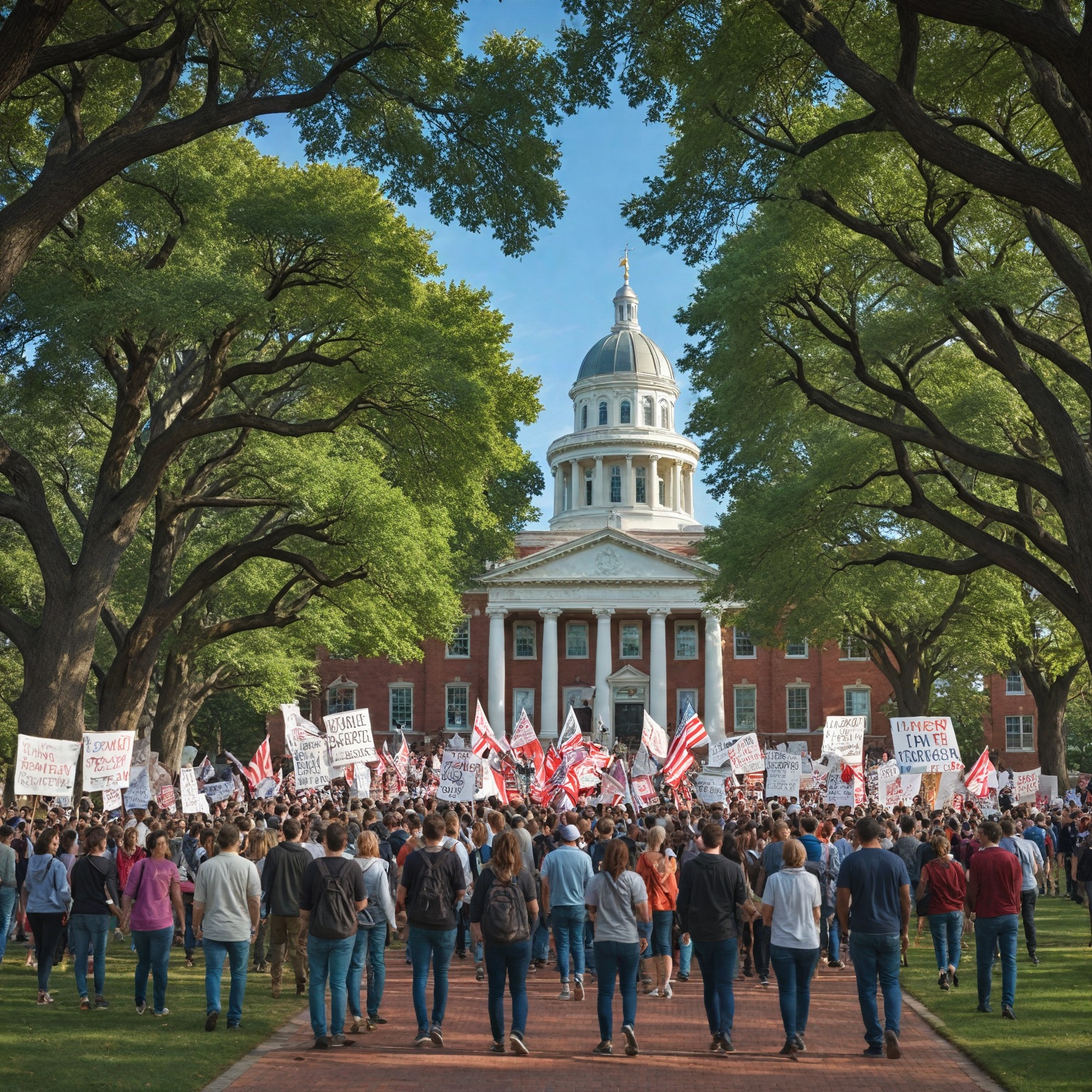
The Trump administration framed the pro-Palestinian protests at Harvard and other campuses as national security threats, conflating advocacy for Palestinian rights and criticism of Israeli actions with antisemitism and support for extremism. This conflation led to efforts to deport foreign protesters and revoke hundreds of visas nationwide, based on a recent executive order targeting international students who “endorse or espouse terrorist activity”. Critics argued that this policy amounted to censorship of protected speech and disproportionately targeted pro-Palestinian voices, with students expressing fears that the administration’s actions were intended to silence any support for Palestine.
Some universities, like Columbia University, acquiesced to certain demands after facing federal funding cuts, including leadership changes and reviews of admissions processes aimed at addressing alleged antisemitism. Harvard, however, has largely resisted such pressures, drawing a clearer line against governmental overreach than before, even as it faced internal and external criticism for initially appearing to yield to some administration demands. Meanwhile, protesters—including some Jewish groups—asserted that the administration’s conflation of legitimate political advocacy with antisemitism was unjust and harmful to open discourse on campuses.
Consequences and Impact
The Trump administration’s threats to bar Harvard University from enrolling foreign students have had significant consequences for the institution and its international student community. Central to the controversy is the demand from the Department of Homeland Security (DHS) that Harvard turn over detailed records of foreign student visa holders, particularly concerning any “illegal and violent activities,” by a specified deadline. Failure to comply would result in the automatic withdrawal of Harvard’s certification under the Student and Exchange Visitor Program (SEVP), effectively barring the university from admitting new international students[1
Related Incidents and Precedents
The Trump administration’s threat to bar Harvard from enrolling foreign students occurred within a broader context of intensified immigration enforcement targeting international students and academic institutions. Since late March, over 1,000 students across 160 colleges and universities have had their visas revoked or legal status terminated, reflecting a nationwide policy of mass termination of student legal status, as described by ACLU attorneys in a lawsuit on behalf of students at Wayne State University and the University of Michigan. This policy has resulted in emergency court orders in multiple states barring immigration authorities from detaining or deporting affected students, including cases involving students at prestigious institutions like the Massachusetts Institute of Technology and Dartmouth College.
In particular, the Department of Homeland Security under Secretary Kristi Noem demanded that Harvard and other universities turn over records on student visa holders related to “illegal and violent activities,” threatening to revoke their Student and Exchange Visitor Program (SEVP) status if they failed to comply. This directive aimed at enhancing scrutiny of foreign students was part of a larger administrative effort to implement “extreme vetting” measures for foreign nationals applying for U.S. visas, potentially including full or partial suspensions of admission from certain countries.
Simultaneously, the Trump administration pursued punitive actions against universities perceived as non-compliant with federal demands or critical of government policies. Harvard faced threats of losing its tax-exempt status and federal funding in response to alleged non-compliance with visa reporting requirements and its stance on campus protests related to Middle Eastern politics. Other institutions, such as Columbia University, Princeton, Brown, Cornell, and Northwestern, also experienced frozen or canceled funding over similar concerns, including protests and diversity, equity, and inclusion (DEI) initiatives.
Some universities, like Columbia and Harvard, made concessions to the administration’s demands. Columbia agreed to leadership changes and reviews of admission processes after a $400 million federal funding cut related to antisemitism accusations, while Harvard dismissed leaders of its Center for Middle Eastern Studies amid criticisms over their representation of Israeli perspectives. Nonetheless, Harvard maintained that no legal basis existed to revoke its tax exemption and warned that such unprecedented actions would jeopardize its educational mission and critical research programs.
Experts have noted that despite high demand for international talent, stricter immigration policies under the Trump administration introduced increased documentation requirements, evidence requests, and longer visa processing times, paralleling earlier measures such as the 2017 Muslim travel ban. These developments collectively illustrate a pattern of heightened governmental scrutiny and enforcement affecting foreign students and their host institutions during this period.
The content is provided by Avery Redwood, Anchor Press