The World Cup’s New Halftime Spectacle: What Changed?
The 2026 FIFA World Cup Final introduced a significant shift in tournament tradition by featuring its first-ever halftime show of substantial scale, transforming the customary break into a globally broadcast entertainment event. This unprecedented move aimed to blend music, culture, and soccer heritage, marking a historic moment for the sport’s premier event. Unlike previous World Cup finals, which maintained a simpler intermission, the 2026 show positioned itself as a major cultural milestone, drawing comparisons to other high-profile sporting spectacles.
This new approach generated considerable discussion among fans and observers, with many questioning the necessity of such an elaborate performance during a soccer match. Concerns were raised regarding the extended stoppage time, potential impacts on player safety, and the condition of the pitch, which traditionally remains pristine for gameplay. The decision to integrate a full-fledged entertainment segment reflected a deliberate effort to broaden the World Cup’s appeal beyond traditional soccer enthusiasts, engaging a wider global audience with a fusion of sport and popular culture.
Who Performed and What Was the Message?
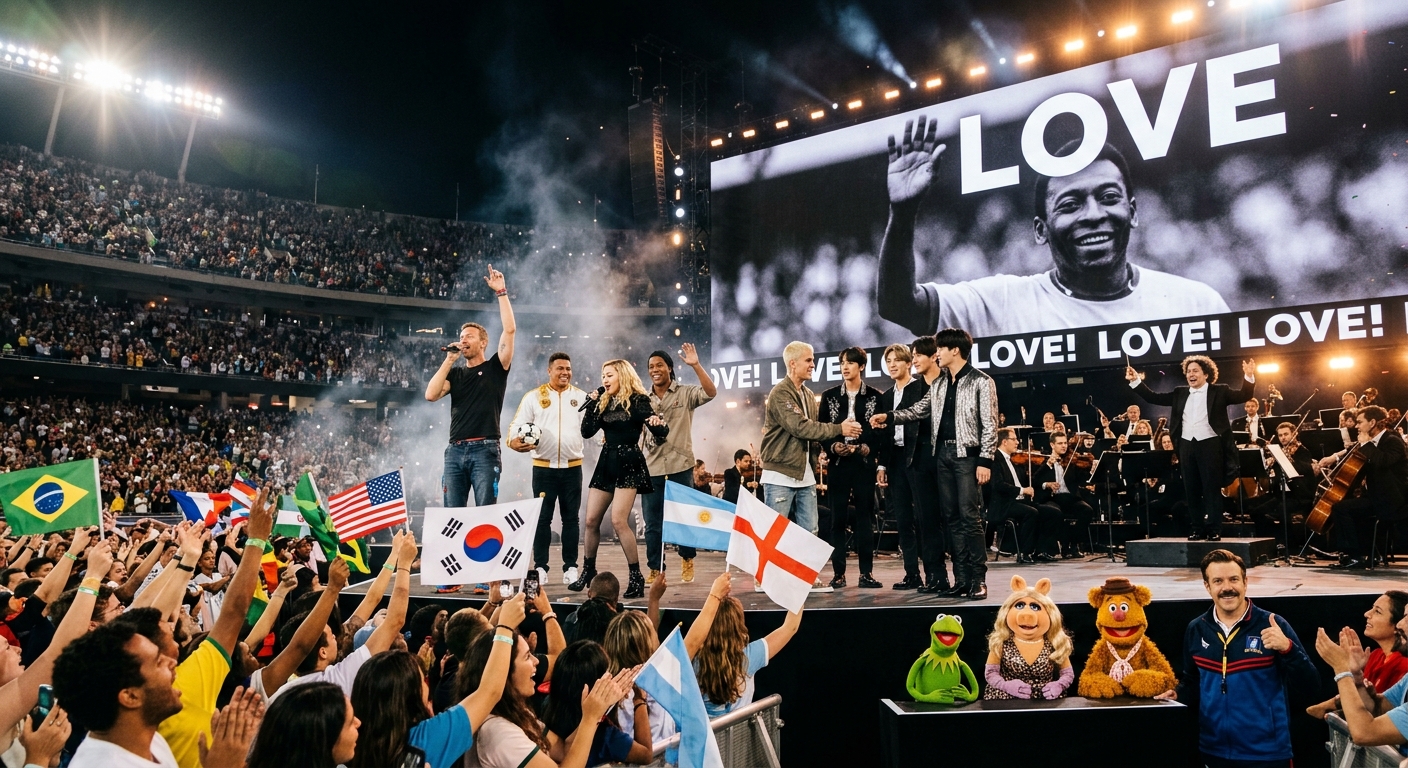
Curated by Coldplay’s Chris Martin and produced under the Global Citizen banner, the 2026 halftime show featured a diverse lineup of international artists, including Madonna, Shakira, Justin Bieber, BTS, and orchestras led by Gustavo Dudamel. This star-studded ensemble aimed to celebrate unity and diversity, aligning with the World Cup’s global spirit and its role as a unifying cultural force. The performance also incorporated beloved cultural icons such as the Muppets and characters from the popular series Ted Lasso, further enhancing its broad appeal.
The conceptual design of the show was deeply intertwined with philanthropic goals, supporting the FIFA Global Citizen Education Fund, which seeks to expand educational opportunities for children worldwide. The core message of love, harmony, and unity was visually reinforced by a prominent “Love” insignia displayed on the stadium field during the performance. This purposeful dimension elevated the spectacle beyond mere entertainment, lending a significant social impact to the event.
Musically, the show was an exercise in cross-genre collaboration, featuring headline acts alongside orchestral pieces conducted by Gustavo Dudamel, who led both the New York Philharmonic and the Simón Bolívar Symphony Orchestra of Venezuela. The inclusion of the children’s chorus from Staten Island’s PS22 and iconic figures like the Muppets further enriched the thematic tapestry, reinforcing messages of unity and joy through a shared musical experience. Despite the ambitious scale, FIFA imposed strict limitations on staging and lighting to preserve the integrity of the pitch, ensuring the focus remained on the sport while still delivering an impactful cultural experience.
How Soccer Legends Were Integrated
The 2026 halftime show uniquely blended star-studded musical performances with tributes to iconic soccer legends, creating a multifaceted celebration of both sport and culture. A poignant video tribute featured the legendary Brazilian player Pelé, who delivered a heartfelt speech centered on the theme of “Love,” encouraging the crowd to echo the word three times. This emotional moment served as a thematic bridge to the final performance segment, culminating in a grand ensemble on the field.
In addition to Pelé’s video message, other soccer greats made memorable live appearances during the show, directly connecting the sport’s heritage with contemporary popular culture. Brazilian legends Ronaldinho Gaúcho and Ronaldo Nazário notably accompanied Madonna onto the field, even riding on an off-road vehicle during her segment. Their dynamic involvement allowed fans to instantly recognize these icons and link their presence to the rich history of the game, although this choice did spark some mixed reactions, particularly from Argentinian supporters present at the event.
Beyond direct appearances, the show also integrated soccer culture through notable personalities and musical elements associated with the sport. Actors Jason Sudeikis and Brendan Hunt appeared in their “Ted Lasso” roles to introduce Justin Bieber’s segment, adding a popular cultural reference linked to soccer fandom. Furthermore, Gustavo Dudamel and The Muppets performed renditions of stadium anthems like “Seven Nation Army,” seamlessly connecting the musical and sporting worlds in a celebratory atmosphere.
Initial Reactions and Comparisons to Other Major Shows
The 2026 FIFA World Cup Final halftime show, while ambitious, elicited mixed reactions from fans and critics, sparking widespread global conversations. Some soccer purists expressed dissatisfaction, arguing that the extended halftime—nearly 30 minutes instead of the usual 15—disrupted the flow of the game and was unwelcome in a sport known for its continuous play. These concerns highlighted a tension between traditionalists who prioritize the game’s integrity and those who embrace a broader entertainment spectacle.
The production’s minimal staging, necessitated by FIFA’s restrictions to preserve the playing field, also drew comparisons to the more elaborate spectacles typical of other major sports events like the Super Bowl halftime show. While the Super Bowl often features complex sets and extensive lighting, the World Cup show opted for a more restrained visual presentation, which some felt lacked the grandeur expected of such a high-profile event. This constraint underscored FIFA’s commitment to prioritizing the pitch’s condition, even while attempting to replicate the cultural impact of other major sporting entertainment.
Despite these criticisms, the performance’s fusion of music, sport, and social messaging generated extensive global discourse and established a new precedent for entertainment at World Cup finals. The inclusion of unique cultural nods, such as Ted Lasso characters and iconic football anthems, resonated with many fans and pop culture enthusiasts, contributing to the event’s broad appeal. Social media reflected the show’s polarizing nature, with some praising the innovative crossover and others questioning its necessity, ultimately positioning the World Cup halftime show as a significant cultural talking point.
What This Means for Future World Cups
The 2026 FIFA World Cup halftime show marked a historic moment, symbolizing a new era of merging sports, music, and culture on the global stage. This creative collaboration, curated by Chris Martin, not only amplified the tournament’s global reach but also echoed the spirit of inclusion and shared celebration that has become a hallmark of recent World Cup events. The decision to introduce a halftime performance aimed to engage a wider audience, including casual viewers, with projections estimating over one billion viewers for the final, significantly exceeding other major sporting events.
The presence of legendary soccer figures like Ronaldo and Ronaldinho, both former World Cup champions, underscored the deep connection between past soccer greatness and the current spectacle. Their appearances, welcomed enthusiastically by the crowd, served as a bridge between generations, honoring the sport’s rich history while inspiring future athletes. This integration of legends alongside contemporary cultural influences, such as characters from The Muppets and references to popular media like Ted Lasso, further highlighted the show’s commitment to accessibility and family-friendly messaging.
Looking ahead, the success and mixed reception of the 2026 halftime show set a precedent for future tournaments to further explore the intersection of sports, entertainment, and social impact. FIFA’s bold attempt to blend global football and popular music on the world’s biggest footballing stage indicates a potential shift in how major sporting events are presented. This landmark event suggests future World Cups may continue to evolve their entertainment offerings, aiming to draw diverse global audiences and enhance the overall value of the tournament’s climax.
The content is provided by Avery Redwood, Anchor Press