Evaluating Edge Virtualization Alternatives
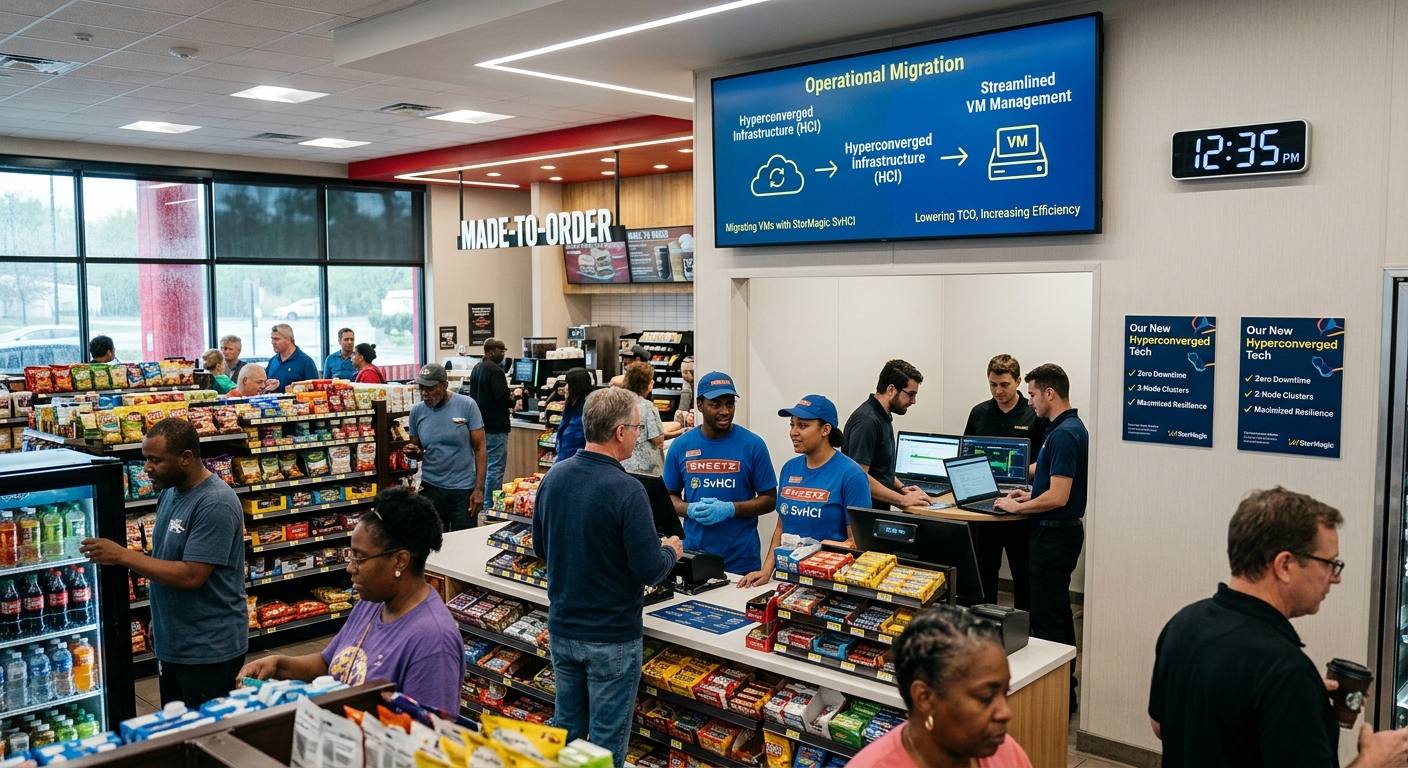
Organizations managing extensive distributed infrastructure often grapple with escalating virtualization costs and operational complexities, particularly at numerous edge locations. Sheetz, a major U.S. retail chain with over 830 stores, faced this challenge directly, prompting a large-scale migration of approximately 11,000 virtual machines (VMs) from VMware to StorMagic’s software-defined hyperconverged infrastructure (SvHCI). This significant transition demonstrates a viable path for enterprises to address rising licensing expenses and simplify management in highly distributed environments.
By strategically leveraging existing Dell R440/R450-series servers, Sheetz successfully avoided costly hardware refreshes, proving that a substantial infrastructure shift doesn’t necessarily demand new capital investments. The project highlights how a rapid, remote rollout can minimize disruption to 24/7/365 retail operations, offering a compelling case study for other businesses considering similar moves. This approach not only delivered over 60% cost savings compared to VMware’s licensing model but also provided improved failover performance and centralized management capabilities tailored for edge-scale deployments.
Addressing VMware Costs and Edge Complexity
For years, Sheetz relied on VMware virtualization across its 830+ store locations, with each site hosting 12 to 14 virtual machines on two Dell R440/R450-series servers. This setup supported critical services like payment processing and loyalty programs, but mounting VMware licensing costs and the inherent complexity of its architecture, specifically the need for a costly third-node witness in high-availability configurations, began to strain the budget and operational efficiency. The traditional VMware model, designed for larger data centers, proved increasingly misaligned with the specific needs of numerous small, distributed edge sites.
The strategic decision to transition to StorMagic’s SvSAN and SvHCI platform directly addressed these challenges, offering a solution optimized for high availability and local compute at the edge without requiring a third witness node. This shift allowed Sheetz to maintain enterprise-grade reliability and centralized management, reducing dependence on continuous on-site technical support. Crucially, the migration leveraged existing hardware, demonstrating that significant infrastructure modernization can be achieved without the prohibitive expense of a complete hardware refresh, a key consideration for organizations with a vast physical footprint.
Streamlining Edge Infrastructure: The Transition Approach
Sheetz’s migration involved moving approximately 11,000 virtual machines from VMware to StorMagic’s SvHCI, primarily driven by the escalating costs associated with VMware’s licensing changes and its architectural requirements for high availability. The company sought a more streamlined and affordable alternative that could support its critical business services without compromising reliability. This transition marked a strategic shift from a multi-node architecture, often requiring additional hardware for resilience, to a simplified two-node HCI solution.
The new architecture not only reduced hardware complexity but also accelerated deployment times, providing a scalable platform for essential retail operations. StorMagic’s pricing model, based per server node and subscription-based on storage capacity, offered significant cost savings—over 60% compared to VMware’s per-core or per-CPU licensing. This economic advantage, combined with a platform specifically designed for edge environments, proved compelling for Sheetz’s numerous small-to-medium-sized store locations, which often contend with limited physical space, power, and on-site technical staff.
Executing such a large-scale migration, spanning over 830 locations at a rate of 200 stores per month, introduced a unique risk profile compared to typical IT modernization projects. Sheetz compressed the migration into quarters rather than years, relying heavily on automation and meticulous planning to minimize disruption to its 24/7/365 retail environment. The SvHCI VMware VM Import Utility, alongside robust automation tools, was instrumental in scaling the migration efficiently while ensuring continuous store operations throughout the compressed timeline.
Strategic Planning for Remote, Cost-Effective Migration
Sheetz’s strategic planning for migrating 11,000 virtual machines from VMware vSphere to StorMagic’s SvHCI platform centered on two critical objectives: significantly reducing costs and ensuring uninterrupted 24/7/365 retail operations. A core tenet of the strategy was to maximize the utility of existing infrastructure, specifically the Dell R440/R450-series servers already deployed at each store. This decision eliminated the need for costly hardware refreshes and extensive on-site technician visits, which are major cost drivers and logistical challenges for distributed environments.
The plan prioritized automation and the SvHCI VMware VM Import Utility to facilitate efficient, remote migration of 12 to 14 VMs per store, with additional VMs slated for replacement to support future Windows 11 adoption. This meticulous approach allowed Sheetz to maintain business continuity and accelerate the rollout, achieving an impressive pace of 200 store migrations per month. While acknowledging that remaining with VMware might have seemed operationally simpler due to existing staff expertise, Sheetz’s IT leadership recognized the superior price-performance ratio and edge-optimized design of SvHCI as a strategic advantage, building on prior positive experiences with StorMagic’s SvSAN technology in their main data center.
Executing a Large-Scale Remote Transition
The implementation phase of Sheetz’s migration involved transitioning approximately 11,000 virtual machines from VMware to StorMagic’s SvHCI across more than 830 store locations. This extensive project was executed remotely, a critical factor in managing the scale and minimizing operational risk, as it eliminated the need for hardware refreshes or costly on-site technician visits at each site. The existing Dell R440/R450-series servers, in use since 2019, were repurposed to run StorMagic’s software-defined hyperconverged infrastructure, which is specifically designed for edge deployments.
The rollout was meticulously orchestrated to align with Sheetz’s continuous 24/7/365 retail operations, where minimizing downtime was paramount. Automation, coupled with StorMagic’s VMware VM Import Utility, proved essential for scaling the migration across hundreds of sites, enabling the remote transfer of 12 to 14 VMs per store. This efficient methodology allowed Sheetz to maintain business continuity and avoid the significant complexity and capital expense typically associated with multi-year virtualization platform migrations, further demonstrating the feasibility of such a large-scale undertaking.
By consolidating multiple single-purpose systems into a streamlined two-node HCI architecture, Sheetz significantly reduced hardware complexity and accelerated deployment times. The elimination of VMware’s requirement for a third-node witness, which previously added considerable cost and complexity, was a key driver and benefit of adopting StorMagic’s solution. This new platform provided centralized management and resilience specifically tailored for a distributed retail environment, effectively meeting Sheetz’s operational demands without requiring any new hardware investments.
Tangible Benefits and Operational Improvements
Sheetz’s successful transition from VMware to StorMagic’s SvHCI platform fundamentally reshaped the typical risk profile associated with large-scale IT modernization projects. By executing remote migrations at a rate of approximately 200 stores per month and eliminating the need for truck rolls to over 830 locations, Sheetz compressed a traditionally multi-year capital event into a matter of quarters, all while maintaining uninterrupted business operations. This rapid deployment capability demonstrates a significant operational advantage for organizations with extensive distributed footprints.
A major impact of this migration was the ability to defer a planned hardware refresh, directly reducing capital expenditures and accelerating the overall deployment timeline. The strategic reuse of existing Dell Technologies R440/R450-series servers at each store facilitated a smooth transition, with over 600 locations migrated within a four-month window. This approach not only aligned with Sheetz’s operational model but also enabled central management without requiring extensive on-site technical staffing or network operations center involvement during off-hours, streamlining ongoing support.
From a performance standpoint, StorMagic’s SvHCI platform delivered notable improvements in high availability and failover speeds, a critical factor for maintaining continuous service at edge locations. Virtual machine failover now occurs in under 30 seconds, a significant enhancement over VMware’s 2.5 minutes and Microsoft Hyper-V’s 4 minutes. This acceleration is attributed to SvHCI’s mirroring technology, which synchronizes data between nodes and eliminates wait times for data availability after a server failure, directly supporting Sheetz’s need for robust local compute and reliable uptime.
Cost savings were a primary driver and a significant outcome of the migration, particularly in light of rising VMware licensing costs under evolving pricing models, with some reports indicating increases up to 500%. StorMagic’s solution offered a substantially better price-performance ratio, helping Sheetz mitigate vendor lock-in while leveraging proven technology designed for 100% uptime. This economic advantage was further amplified by StorMagic’s focus on serving edge environments and small-to-medium-sized sites within large distributed enterprises, which face unique constraints around physical space, power, and budget, making the solution particularly well-suited for Sheetz’s needs.
Key Insights for Distributed IT Leaders
Sheetz’s large-scale migration provides several critical insights for organizations contemplating complex virtualization transitions in distributed environments. A paramount lesson learned was the indispensable role of resilience and centralized management for edge infrastructure. The successful rollout demonstrated that StorMagic’s solution could meet demanding 24/7/365 operational requirements across hundreds of locations without requiring hardware replacements or on-site technician visits, significantly reducing potential downtime and operational disruptions.
The strategic deployment of automation and specialized tooling, such as SvHCI’s VMware VM Import Utility, proved vital in scaling the migration efficiently while minimizing business disruption. This approach ensured that store operations continued smoothly throughout the transition, which is a non-negotiable for an enterprise with continuous retail operations. The remote migration process, leveraging existing Dell Technologies servers at each site, further underscored the value of optimizing existing infrastructure to reduce costs and complexity, a key consideration for any large-scale IT project.
Another important takeaway was the profound financial impact of vendor licensing changes, as highlighted by reports of steep price increases from some traditional virtualization providers. This economic pressure motivated Sheetz to actively explore alternative solutions better suited for edge-scale deployments, specifically those that simplify upgrades and reduce total cost of ownership. The ability to migrate without requiring extensive re-architecting or new hardware investments made the transition both financially attractive and practically feasible.
Ultimately, the migration illustrated that while staying within a familiar ecosystem like VMware might initially seem simpler due to existing staff expertise, an openness to exploring alternative platforms can yield substantial operational and financial benefits. This experience suggests that organizations facing similar distributed and edge computing challenges should critically evaluate a broader range of options beyond traditional vendors, especially when cost, agility, and remote management are critical considerations for their business model.
Future-Proofing Edge Infrastructure
Sheetz’s ongoing virtualization migration signals a broader shift in how distributed edge infrastructure can be managed, demonstrating that a successful transition away from entrenched virtualization platforms is operationally viable today. Organizations operating numerous sites on traditional virtualization platforms are encouraged to consider Sheetz’s experience as a catalyst to accelerate their own evaluation timelines for alternative solutions. The project confirms that significant infrastructure changes can be implemented without waiting for distant future planning cycles.
The retailer plans to complete the transition of approximately 12 to 14 virtual machines per store from VMware vSphere to StorMagic’s SvHCI platform, with additional VMs transitioning from Windows 10 to Windows 11 in the coming months. This phased approach continues to leverage automation and the SvHCI VMware VM Import Utility, which have proven critical in scaling the migration while minimizing disruption to Sheetz’s 24/7/365 retail operations. The continuity of this strategy underscores its effectiveness and long-term viability.
Looking ahead, Sheetz intends to maintain the SvHCI platform on its existing Dell Technologies R440/R450-series servers, avoiding the need for hardware replacements or on-site technician visits. This strategy reflects a deliberate move towards a resilient, centrally managed hyperconverged infrastructure that aligns perfectly with the cost-effectiveness and operational demands of Sheetz’s distributed retail environment. The sustained use of current hardware highlights the long-term value of selecting solutions that maximize existing investments.
Furthermore, Sheetz’s experience underscores the importance of meticulous assessment when migrating off any established virtualization platform, given the inherent complexity of converting VMs, reconfiguring networks, and adapting management practices. While some organizations may explore alternative hypervisors or cloud migration strategies, Sheetz’s approach emphasizes careful planning and robust automation to ensure compatibility, performance, and minimal business impact throughout the entire transition. This diligent planning is crucial for any organization considering a similar strategic shift.
The content is provided by Avery Redwood, Anchor Press