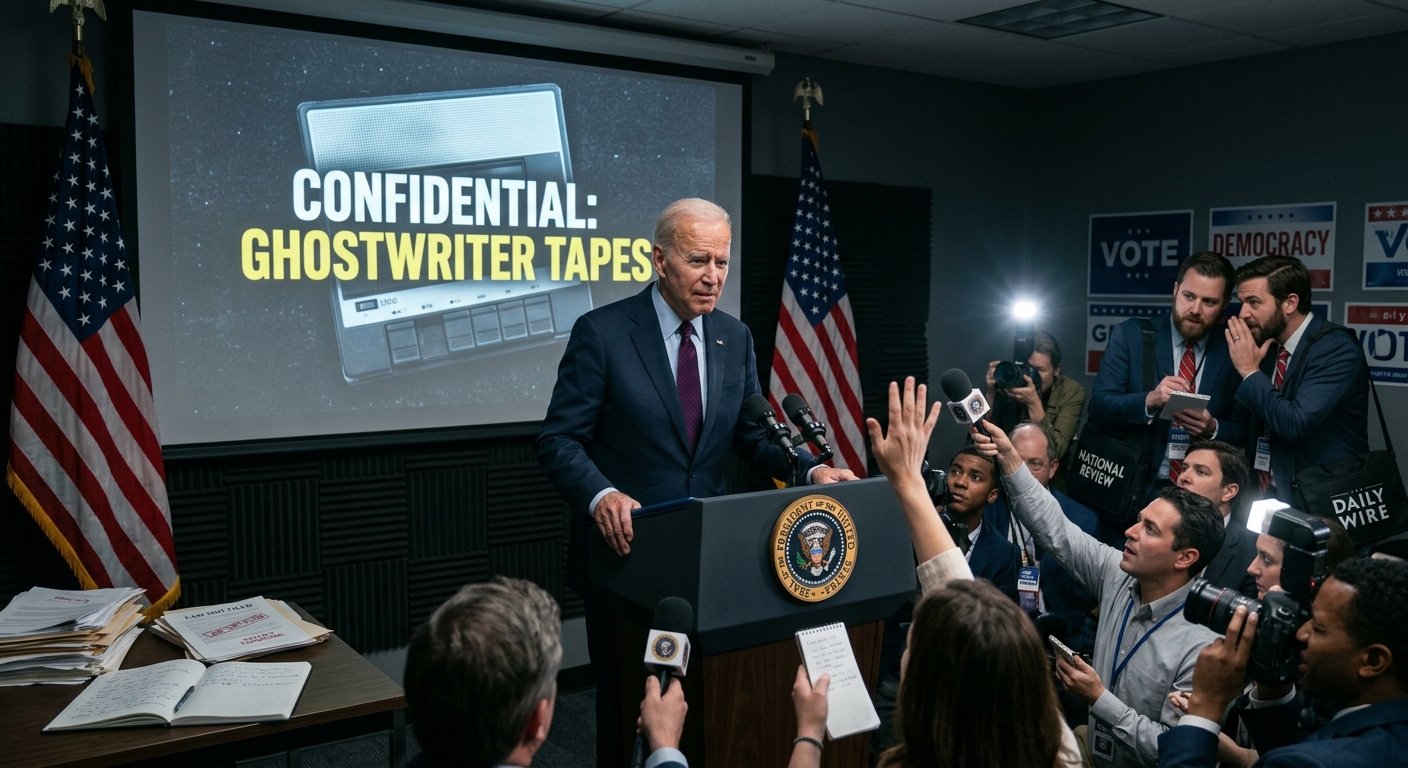
Understanding the Biden Ghostwriter Tapes Controversy
The upcoming release of approximately 70 hours of audio recordings and transcripts from interviews between U.S. President Joe Biden and his memoir ghostwriter, Mark Zwonitzer, has become a significant political and legal flashpoint. These candid conversations, recorded in 2016 and 2017 during the writing of Biden’s memoir Promise Me, Dad, were initially intended to remain private but have since been obtained by federal investigators. The tapes are now at the center of intense public scrutiny due to allegations concerning Biden’s cognitive state and his handling of classified documents following his vice presidency.
This controversy gained momentum after Special Counsel Robert Hur’s investigation into Biden’s post-vice-presidential handling of classified materials concluded, noting moments in the recordings that purportedly showed signs of memory difficulty. While Hur’s report ultimately found no evidence of intentional disclosure of classified materials, conservative groups, most notably the Heritage Foundation, have seized upon the recordings as potential evidence of both cognitive decline and improper handling of sensitive information. The ongoing legal battles over their release highlight fundamental tensions between individual privacy rights and the public’s demand for governmental transparency, particularly concerning high-ranking officials.
What the Tapes Reportedly Contain
The core of the controversy lies within roughly 70 hours of audio recordings and corresponding transcripts, capturing interviews between Joe Biden and his ghostwriter, Mark Zwonitzer, conducted in 2016 and 2017. These sessions, held at Biden’s home, were part of the process for writing his memoir, Promise Me, Dad, and were intended to be private reflections on his time as Vice President. Biden’s legal team has consistently argued that these were personal conversations, not meant for public dissemination, and were only obtained by investigators as part of a criminal probe into his handling of classified documents.
Investigators, led by Special Counsel Robert Hur, reportedly found instances within the tapes where Biden discussed the discovery of classified materials, including one notable exchange where he allegedly stated, “I just found all the classified stuff downstairs.” Hur’s report also highlighted two separate incidents where Biden’s memory was described as “significantly limited,” one during a 2017 recorded conversation with Zwonitzer and another during a 2023 interview with investigators. Furthermore, the report indicated that Biden read classified information from his notebooks to Zwonitzer on at least three occasions, nearly verbatim, though these actions were assessed as possibly unintentional and not indicative of deliberate disclosure.
The Legal Battle Over Their Release
The journey of these recordings from private conversations to public controversy has been marked by a complex series of legal challenges, primarily initiated by conservative groups seeking their release. In April 2024, the Heritage Foundation filed a lawsuit demanding public access to the tapes and transcripts, arguing for transparency regarding a former Vice President’s conduct and cognitive fitness. Initially, the Department of Justice (DOJ) resisted this demand for nearly two years, citing Biden’s fundamental right to privacy in personal conversations conducted within his home, likening the recordings to “entries in a personal diary.”
However, in a significant reversal in May 2024, the DOJ announced its intention to disclose both the transcripts and audio recordings, prompting President Biden to sue the department to block their dissemination. Biden’s legal team emphasized that every American, regardless of their public office, possesses a right to privacy in such personal discussions, and that the DOJ has a responsibility to protect sensitive information obtained during criminal investigations. Despite these arguments, a federal trial judge, Dabney Friedrich, after reviewing the tapes personally, largely sided with the Heritage Foundation, allowing the DOJ to proceed with releasing redacted versions, noting that many of Biden’s privacy concerns had been addressed by the proposed redactions.
Further legal proceedings saw an appeals court reject Biden’s bid to block the release, with the U.S. Court of Appeals for the District of Columbia declining to grant injunctions, a decision supported by both Obama and Trump appointees, though a Biden appointee dissented. Facing the high likelihood of the tapes’ release, the Biden team eventually acquiesced, agreeing to turn over the materials to the Heritage Foundation. This protracted legal dispute underscores the intense partisan divisions surrounding the tapes and the broader debate over governmental transparency versus individual privacy at the highest levels of government.
Concerns About Authenticity and Privacy
The integrity and authenticity of the ghostwriter tapes have become a significant point of contention, raising questions about the completeness and reliability of the evidence. A forensic review of the recordings revealed that portions had been overwritten with separate audio, indicating that some files were either deleted or altered prior to their examination by investigators. This finding is particularly relevant given that Biden’s ghostwriter, Mark Zwonitzer, reportedly deleted some of these recordings after becoming aware of a federal probe into classified documents, though investigators were ultimately able to recover the deleted files.
These revelations introduce a layer of complexity regarding the tapes’ evidentiary value and have fueled arguments from various parties. Biden’s legal team has consistently stressed the importance of safeguarding the privacy of these conversations, asserting that all Americans, including public officials, have a right to privacy in personal discussions conducted within their own homes. They contend that the Department of Justice bears a special responsibility to protect such sensitive information, especially when obtained during criminal investigations that ultimately did not result in charges.
Conversely, groups advocating for the tapes’ release argue that these recordings, having been acquired during an investigation led by Special Counsel Robert Hur into potential improper disclosure of national security information, constitute government records that should be publicly accessible. The debate over how to authenticate and verify the contents of these recordings, alongside the fundamental tension between privacy rights and public accountability, remains pivotal. This ongoing discussion significantly impacts both the legal proceedings and the public perception of the tapes’ true meaning and implications.
Potential Impact on Public Discourse and Elections
The impending public release of the Biden ghostwriter tapes is widely anticipated to significantly influence political discourse, particularly as the 2026 election cycle approaches. Conservative organizations, including the Heritage Foundation, have explicitly stated their intention to make the full scope of the tapes and transcripts immediately accessible upon release, aiming to shape public opinion regarding President Biden’s fitness for office and his alleged mishandling of classified information. This strategic dissemination is designed to amplify existing concerns and potentially sway voter perceptions.
Biden’s legal team has vigorously argued that these recordings involve a substantial privacy interest, emphasizing that the conversations occurred in his home and were collected during a criminal investigation that ultimately yielded no charges. They maintain that the public interest does not outweigh the fundamental right to privacy, and that the Department of Justice has a responsibility to protect such information from politically motivated disclosures. This clash between privacy and transparency highlights the intricate balance required when issues of national security, personal rights, and political accountability intersect at the highest levels of government.
The controversy surrounding the tapes also reflects broader partisan disputes, with conservative groups contending that the recordings will validate claims about Biden’s cognitive decline and reveal instances of improper classified information disclosure. These groups have criticized Biden’s efforts to block the release as mere delay tactics designed to obscure the truth from the American public. Special Counsel Robert Hur’s characterization of Biden as “a sympathetic, well-meaning, elderly man with a poor memory” has already sparked significant debate, and the forthcoming public release of these materials is poised to further intensify political discourse, potentially impacting public perceptions and the trajectory of ongoing oversight efforts.
The content is provided by Sierra Knightley, Anchor Press