
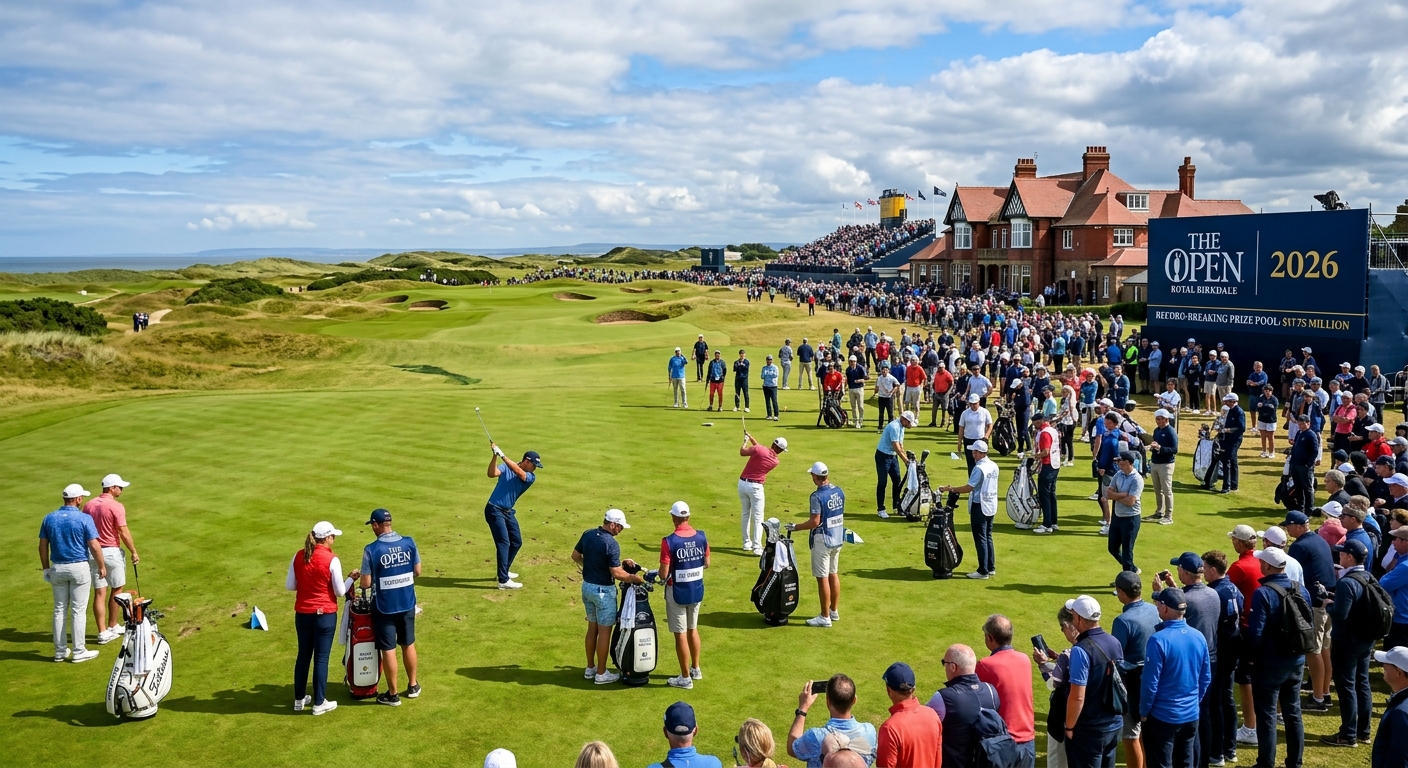
Understanding the 2026 Open Championship Prize Money
The 2026 Open Championship, set to take place at Royal Birkdale Golf Club, will feature a total prize fund of $17.75 million, representing a significant increase of $500,000 from the previous year’s purse. The champion will receive $3.2 million, an increase of $100,000 from the 2025 winner’s share, reflecting the tournament’s commitment to enhancing financial incentives for top performers. This record-setting payout underscores The Open’s continued evolution within professional golf’s competitive and commercial landscape.
Beyond the winner, the 156-player field benefits from a tiered prize distribution system designed to compensate a broad range of competitors. Players who miss the cut after the second round will still receive prize money, ranging from $9,100 to $12,900 based on their position at the cut-off. For those who make the cut (top 70 players and ties), the prize fund ensures substantial payouts, though individual amounts may adjust slightly if more than 70 players qualify, with a minimum payout of $39,450.
It is crucial to recognize that these announced figures represent gross prize money, not the actual take-home earnings for players. Professional golfers incur significant expenses, including taxes, agent fees, caddie costs, and other operational expenditures, which considerably reduce their net income. Therefore, while the headline numbers are substantial, players must factor in these deductions when evaluating the financial opportunity of competing in The Open.
Comparing The Open’s Prize Pool to Other Major Championships
Despite its recent increase, the 2026 Open Championship’s $17.75 million prize pool remains the smallest among golf’s four major tournaments. This consistent trend highlights a deliberate distinction in The Open’s financial strategy compared to other elite events. For instance, the 2025 Players Championship awarded its winner $4.5 million, significantly more than The Open’s $3.2 million winner’s share, illustrating the disparity in top-tier payouts across the professional golf landscape.
This conservative approach to prize money growth at The Open reflects The R&A’s unique philosophy, which prioritizes the tournament’s rich tradition and the symbolic value of the Claret Jug over maximizing immediate financial rewards. While other major championships and PGA Tour events often boast larger purses, The Open maintains its prestige through its historical significance and the challenge of its iconic links courses. The decision to pay prize money in US dollars since 2017 does, however, align it with international standards, making comparisons with other global events more straightforward.
The field size, capped at 156 players, is determined through a combination of exemption criteria and qualifying tournaments, including the new Last Qualifier event for 2026. This structure, while ensuring a competitive and diverse lineup, is part of The Open’s distinct identity, contrasting with events that might have larger or more fluid entry lists and often correspond with higher prize pools. The unique qualification pathways and the tournament’s historical gravitas continue to draw top talent, even with a comparatively smaller purse.
The R&A’s Strategy Behind The Open’s Prize Money Decisions
The R&A’s approach to The Open’s prize money is shaped by a strategic philosophy that balances financial incentives with broader goals for golf’s global development. Unlike some other lucrative tournaments that prioritize maximizing player payouts, The R&A reinvests a significant portion of championship revenue into initiatives that support and promote the sport worldwide. This conservative yet consistent growth in the purse reflects a commitment to the long-term health and accessibility of golf, ensuring that player earnings are considered within a larger ecosystem of sport development.
A key factor in the prize pool’s structure is the currency in which it is awarded; since 2017, The Open has paid prize money in US dollars, moving away from pound sterling. This shift aligns the championship with the most widely adopted prize currency in professional golf, facilitating easier comparisons with other major tournaments and reinforcing its global appeal. This decision underscores The Open’s international stature and its adaptation to modern financial standards within the sport.
While the overall trend in professional golf is towards increasing prize money, driven by rising popularity, sponsorship, and broadcast revenues, The R&A carefully manages these increases. This measured growth ensures that The Open remains competitive in attracting top talent while upholding its unique identity and mission. The organization continuously evaluates how prize money distribution can best support both elite players and the broader golfing community, influencing the sport’s financial landscape for years to come.
Beyond the Prize Money: Player Earnings and Tournament Appeal
While the increased prize pool for the 2026 Open Championship enhances its financial appeal, a professional golfer’s actual earnings extend far beyond tournament winnings. Elite players often supplement their income with substantial endorsement deals, appearance fees, and performance bonuses, which can significantly outweigh the prize money itself. This broader financial ecosystem means that the prestige of winning the Claret Jug and the exposure gained from competing in The Open often hold as much, if not more, value than the direct financial payout for top-tier athletes.
The enhanced prize money is expected to strengthen the competitive field, attracting a diverse range of top players motivated by both the financial reward and the historical significance of the championship. New qualification pathways, such as the Last Qualifier event introduced for 2026, further democratize access, allowing a broader pool of talent—including emerging professionals and amateurs—to vie for a spot. This combination of increased incentives and expanded access aims to deepen the competitive landscape and elevate the tournament’s global reach.
However, the reception to the prize pool increase has been mixed, with some acknowledging the record payout while others point to the ongoing financial disparities between The Open and other major championships. This discussion underscores the complex economic realities of professional golf, where gross prize figures must be contextualized against player expenses and the diverse income streams that define a golfer’s career. The R&A’s initiatives, including prize money adjustments and new eligibility pathways, are seen as complementary strategies to foster the sport’s growth and sustainability.
The Open’s Future: Balancing Tradition and Modern Demands
The 2026 Open Championship’s prize pool announcement underscores The R&A’s ongoing commitment to maintaining the tournament’s status as a premier global event while navigating the evolving financial landscape of professional golf. This strategic increase reflects a forward-looking approach that acknowledges the need to attract and retain top talent, ensuring the championship remains at the pinnacle of the sport. The R&A continually balances its rich heritage with the commercial demands of modern golf, aiming to sustain growth and appeal for future generations.
As one of golf’s oldest and most prestigious tournaments, established in 1860, The Open has a long history of adapting to change, from its early days with no prize money to the multi-million dollar purses of today. This evolution, including the upcoming 154th edition at Royal Birkdale—a venue with a storied past and recent course enhancements—demonstrates a dedication to both tradition and innovation. The R&A’s decisions regarding prize money and qualification pathways are integral to ensuring the championship’s continued relevance and competitive excellence.
The upward trend in The Open’s prize money mirrors broader developments across major golf tournaments, signaling the sport’s expanding commercial appeal and global reach. This financial growth not only benefits elite professionals but also influences the distribution of revenues across different levels of the sport, fostering greater equity and sustainability within the golfing ecosystem. Ultimately, The R&A’s measured strategy aims to cement The Open’s position as a cornerstone of professional golf, upholding its historic prestige while adapting to contemporary challenges.
The content is provided by Sierra Knightley, Anchor Press