Tesla Sees Surge in Sales, But Rising Costs and Expenses Could Impact Growth
Evaluating Tesla’s Market Position and Future Value
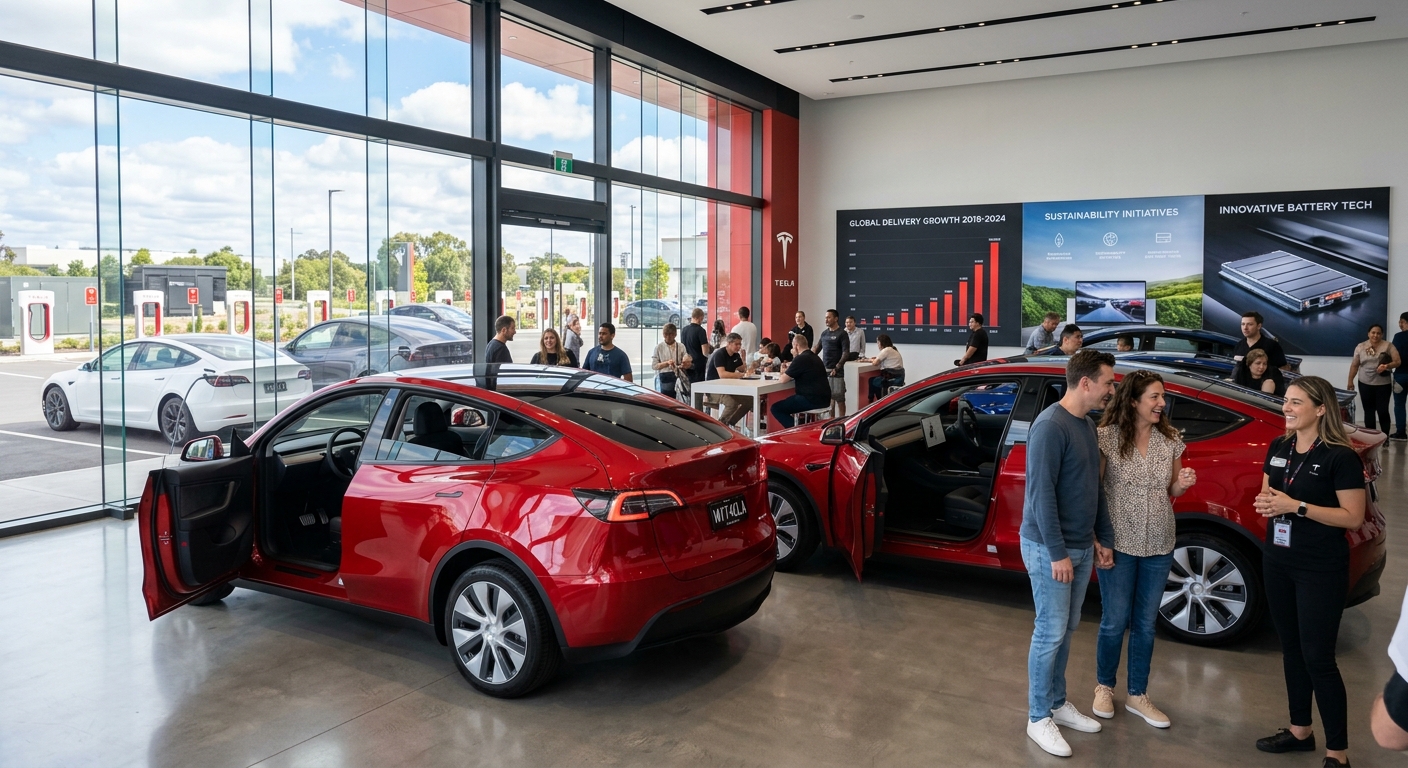
Tesla has solidified its position as a leading electric vehicle (EV) manufacturer, largely propelled by the strong demand for its Model 3 and Model Y vehicles, which achieved record sales of 1.8 million units globally in 2023. The Model Y alone surpassed established best-sellers like the Toyota RAV4 and Corolla in key markets, demonstrating Tesla’s significant market penetration. However, this impressive sales growth has been accompanied by increasing operational costs and expenses, leading to a notable compression in profitability margins that warrants closer examination for potential buyers or investors.
From 2022 to 2025, Tesla’s gross profit margin declined from a peak of 25.4% to approximately 18%, while operating profit margins fell sharply from 16.8% to under 5%, reflecting intensifying cost pressures across its automotive production, research and development (R&D), and administrative functions. The gross profit per vehicle also dropped by over 50% during this period, influenced by higher raw material prices, inflationary trends, and global supply chain disruptions. In response, Tesla has initiated strategic measures, including manufacturing innovations like large single-piece castings and modular battery designs, alongside restructuring efforts and expanded investments in battery technology, all aimed at reducing costs and enhancing production efficiency to sustain its long-term expansion.
Assessing Recent Sales Trends and Pricing
While Tesla achieved significant sales growth in recent years, particularly with the Model 3 and Model Y, the sales momentum showed signs of weakening in late 2023 and early 2024. U.S. sales figures for 2024 are estimated to decline from their 2023 peak, contributing to the company’s first global annual delivery decline in over a decade. This shift suggests that while demand remains strong for specific models, the overall market dynamics are becoming more challenging for sustained volume growth.
The company’s revenue mix has also evolved, with a decreasing reliance on automotive sales as energy and services segments contribute more significantly to overall revenues. Despite increased sales volumes in earlier years, rising costs across all major revenue categories, especially automotive, have led to a compression of profitability per vehicle. Gross profit per car, for instance, peaked at $15,492 in 2022 but sharply declined to $7,555 by 2025, representing a 51% reduction, which impacts the company’s ability to invest in future innovations or maintain competitive pricing without further margin pressure.
Pricing adjustments have also been observed, with the Tesla Model 3 Performance and both Model Y variants seeing a $3,000 price increase in the U.S. in 2024. These adjustments reflect broader inflationary pressures but could also influence consumer demand and sales volumes, making it important for potential buyers to consider how these changes affect affordability and value. Despite these headwinds, Tesla continues to expand its production capacity and delivery infrastructure, supported by ongoing strategic investments in charging networks and new technologies, which could stabilize future sales.
Understanding Tesla’s Financial Health
Tesla’s total revenue has shown consistent growth, increasing from approximately $81.46 billion in 2022 to $97.88 billion on a trailing twelve months (TTM) basis by 2025. However, this revenue expansion has not translated into proportional gross profit growth, which peaked in 2022 at $20.85 billion before stabilizing around $17 billion through 2025. This trajectory indicates that while sales are rising, the cost of generating that revenue has also increased, putting pressure on overall profitability.
Operating expenses, encompassing research and development (R&D), selling, general and administrative (SG&A) costs, and restructuring expenses, have grown both in absolute terms and as a percentage of revenues. R&D expenses, in particular, rose significantly from 4.82% to 6.76% of revenue, signaling Tesla’s intensified investment in innovation, such as new battery technologies and modular manufacturing processes aimed at long-term cost reduction and product affordability. SG&A costs also increased substantially, rising from approximately $3.95 billion in 2022 to $4.8 billion in 2023, reflecting the expanding scale of the company’s operations.
Tesla’s operating profit peaked at $13.7 billion with a 16.8% margin in 2022, but then compressed sharply to $4.4 billion and a 4.6% margin by 2025, a significant 68% contraction when measured by GAAP operating profit. While this decline is substantial, adjusted EBITDA, a non-GAAP measure reflecting cash earnings power, showed a more moderate 25% decline over the same period, suggesting that Tesla’s underlying operational cash generation remains more robust than net income figures alone might indicate. For investors, this distinction is crucial for evaluating the company’s capacity for future investment and debt servicing.
Free cash flow (FCF) trends further illustrate Tesla’s financial dynamics, with net cash from operating activities growing to a peak exceeding $16 billion in 2022 before moderating to around $13.9 billion in early 2023. Capital expenditures also rose steadily during this period, from approximately $2.4 billion to $7.8 billion, reflecting continuous investment in factory expansions and technology development. Consequently, FCF increased but at a slowing pace, peaking near $8.9 billion before dropping to just over $6 billion by early 2023, indicating that significant capital is being reinvested into the business to support future growth.
Understanding the Drivers of Rising Costs
Tesla has experienced a notable increase in operating expenses as a percentage of revenues, rising from 13.16% in 2021 to 13.43% in 2025, driven by several interconnected factors. Higher research and development (R&D) costs, which expanded from 4.82% to 6.76% of revenue, reflect intensified investment in innovation across its automotive, energy, and service sectors. The automotive cost of revenues also saw a slight but significant rise, indicating potential inflationary pressures or inefficiencies in production and service delivery that impact the final vehicle price.
Inflation in raw materials has notably increased production expenses, with prices of critical battery components such as lithium and nickel surging dramatically due to supply constraints and escalating global demand for electric vehicles. Tesla has responded by seeking long-term supply contracts and expanding local sourcing strategies in North America, including plans to develop a cathode manufacturing facility and exploit domestic lithium clay reserves, aiming to reduce transportation costs and mitigate supply chain risks. These efforts are crucial for stabilizing future vehicle pricing and ensuring material availability.
Supply chain disruptions, including global chip shortages and reliance on China-based suppliers, have also impacted Tesla’s ability to meet production targets and contributed to cost inflation. Trade policy uncertainties and raw material bottlenecks pose ongoing challenges to scaling production, particularly for high-demand models like the Cybertruck and Semi, which can affect delivery timelines and overall vehicle availability. Furthermore, Tesla’s vertically integrated manufacturing approach means that delays or inefficiencies in one segment can propagate throughout the production system, amplifying cost pressures and potentially influencing vehicle prices.
Competition within the electric vehicle market has intensified, increasing pressure on Tesla to innovate while managing supply chain complexities and production capacity constraints. Despite these challenges, Tesla’s Gigafactory Shanghai has remained a central production hub, delivering over half of the company’s vehicles globally in Q3 2023, though it has faced disruptions related to factory upgrades and preparations for new model launches. In addition to addressing raw material sourcing, Tesla is investing in advanced manufacturing technologies, such as fully dry-electrode 4680 battery cells and modular vehicle assembly techniques, which are expected to decrease battery costs, factory footprints, and overall production expenses significantly, enabling future vehicles to reach lower price points while maintaining profitability.
Impact on Profitability and Growth Trajectory
Tesla experienced significant fluctuations in its profitability margins between 2021 and 2025, reflecting underlying challenges related to rising costs and operating expenses amid fluctuating revenues. The gross profit margin, after peaking at 25.4% in 2022, declined sharply to 18.25% in 2023 and further to 17.86% in 2024, with only a slight recovery to 18.03% observed in 2025. This downward trend was largely attributed to the increasing costs of goods sold as a proportion of revenue, alongside a decrease in revenue per vehicle and overall vehicle volumes in later years, which directly impacts the company’s ability to generate cash for reinvestment.
Operating profit margin followed a similar trajectory, rising to a peak of 16.76% in 2022 before contracting sharply to 9.19% in 2023 and continuing its decline to 4.59% in 2025, equating to an operating profit of roughly US$4.4 billion. This compression in operating profit margin reflected the impact of increased operating expenses, including research and development (R&D), selling, general and administrative costs, and restructuring expenses, which collectively increased as a percentage of revenues. For potential investors, this trend indicates a reduced efficiency in converting revenue into operational earnings, which could affect future stock performance.
A more granular analysis of profitability on a per-vehicle basis revealed significant margin compression, which is a critical metric for understanding the company’s core automotive business. Gross profit per car fell from $15,492 in 2022 to $7,555 in 2025—a 51% reduction from its peak—while gross margin per vehicle, including regulatory credits, compressed from 29.3% in 2021 to 17.8% in 2025. This confirms both an absolute and proportional deterioration in per-vehicle profitability, suggesting that while Tesla sells more vehicles, each sale contributes less to the bottom line, potentially limiting its flexibility in future pricing or feature additions.
These profitability pressures were compounded by changes in Tesla’s product mix and market strategy, such as selling lower-cost versions of its popular Model 3 and Model Y vehicles following the discontinuation of higher-priced models. This shift contributed to a decline in overall gross margin, falling below analysts’ expectations in some quarters. Additionally, inflationary pressures and inefficiencies across automotive, energy, and services segments likely contributed to rising costs, with automotive cost of revenue increasing marginally between 2021 and 2025, further challenging Tesla’s ability to maintain strong profit margins.
Tesla’s Strategic Responses to Cost Pressures
In response to the rising costs and operating expenses impacting its profitability, Tesla has implemented a series of strategic initiatives aimed at enhancing manufacturing efficiency and reducing costs. One of the cornerstone innovations is the introduction of the “Unboxed” manufacturing process, which seeks to revolutionize traditional vehicle assembly methods by utilizing large single-piece castings to replace hundreds of individual parts. This approach is projected to cut production costs by up to 50%, potentially lowering the cost per vehicle from approximately $39,000 to below $20,000, which could enable the production of an affordable $25,000 model while maintaining industry-leading gross margins.
Tesla is also adopting a phased rollout strategy for this manufacturing transformation, with plans to introduce more affordable models using aspects of the new platform on existing production lines in early 2025. Full-scale deployment is expected to leverage the Mexico Gigafactory and other facilities to meet global demand and support electrification goals, which could significantly impact future vehicle availability and pricing. Alongside these manufacturing innovations, Tesla is enhancing production efficiency by reducing reliance on expensive materials, simplifying vehicle designs, and increasing automation to lower labor costs, all contributing to a more streamlined and cost-effective production process.
In parallel, Tesla is advancing its battery technology and integration methods to further reduce costs and improve performance, which is critical for maintaining its competitive edge. The company’s battery management system (BMS) ensures precise monitoring and control of battery health, charge, and temperature, facilitating longer battery life and better range estimates for consumers, thus enhancing the value proposition of its vehicles. Additionally, Tesla is adopting a modular battery architecture, integrating battery packs as structural components of the vehicle to optimize space and efficiency, which supports its ambitions to produce more affordable electric vehicles without sacrificing quality or reliability.
Navigating the Competitive Landscape
Tesla has maintained a leading position in the global electric vehicle (EV) market, having produced and sold nearly 8.9 million vehicles worldwide to date, with a record 1.8 million units sold in 2023 alone. The Tesla Model Y has continued to dominate the European electric car market throughout 2025, underscoring the brand’s strong presence in key regions. However, competition in the EV sector is intensifying rapidly, as legacy automakers and new entrants, particularly from China, increasingly challenge Tesla’s market share and push for innovation.
The competitive pressure is further compounded by supply chain challenges that impact critical areas such as battery supply, raw material sourcing, and production capacity, which collectively threaten to constrain Tesla’s ability to scale and meet growing demand. The EV industry functions as an innovation ecosystem involving multiple stakeholders—including manufacturers, battery suppliers, component providers, and charging infrastructure companies—each making independent strategic decisions that influence market dynamics and technology development. This complex environment requires Tesla to continuously adapt its strategies to maintain its leadership.
In response to evolving market conditions, Tesla’s revenue mix has shifted, with a decreasing reliance on automotive sales and rising contributions from energy and service segments. While this diversification helps broaden Tesla’s business base and reduce dependence on vehicle sales alone, it has also been accompanied by increased costs and operational expenses, which have put downward pressure on overall profitability. The automotive cost of revenues, in particular, has seen the most significant rise, indicating inflationary pressures or inefficiencies within production and service delivery that Tesla must address to remain competitive.
Tesla’s Future Outlook and Strategic Priorities
Tesla’s future outlook reflects a complex interplay between its strong sales momentum and rising costs and expenses, which could significantly impact its growth trajectory. While the company has experienced a surge in revenues, the consistent downward trend in key profitability metrics from 2022 through 2025 highlights significant challenges ahead, with gross profit margin declining to 18.03% and operating profit margin falling sharply to 4.59% by 2025. These trends suggest that while demand for Tesla vehicles remains high, the company’s ability to translate that demand into robust profits is under pressure.
Tesla’s management appears focused on balancing near-term slower vehicle growth with strategic investments in new platforms, autonomy, energy products, and manufacturing innovations. The company is prioritizing capital allocation through a structured framework to optimize returns across its vehicle programs, energy-storage expansion, charging infrastructure, and AI compute investments, which are critical for its long-term vision. Initiatives related to commercial vehicles and fleet strategy, such as the Tesla Semi and fleet-related route economics, continue to receive strategic support to enhance customer value and scale operations effectively, potentially opening new revenue streams.
However, Tesla’s reliance on a global supply chain, particularly its dependence on raw materials like lithium, cobalt, and nickel sourced largely from China, introduces significant vulnerabilities. Geopolitical risks, trade tensions, fluctuating tariffs, and ethical mining concerns pose potential disruptions that could affect production costs and supply continuity, adding uncertainty to Tesla’s ability to maintain its market leadership in electric vehicles while controlling input costs. For investors, these supply chain risks represent a critical factor in evaluating the company’s stability and future growth potential.
Financially, although Tesla’s GAAP operating profit has seen a pronounced contraction, adjusted EBITDA figures suggest a more resilient underlying cash earnings power, which provides a more optimistic view of its operational health. Non-operating investment gains have also influenced net profits, underscoring the importance of distinguishing core operational performance from ancillary income sources when assessing future earnings quality. Moreover, cash flow management remains crucial, with Tesla generating significant free cash flow but facing ongoing capital expenditures to support its expansion and technological development, indicating a continuous need for strategic financial planning.
The content is provided by Jordan Fields, Anchor Press