
Summary
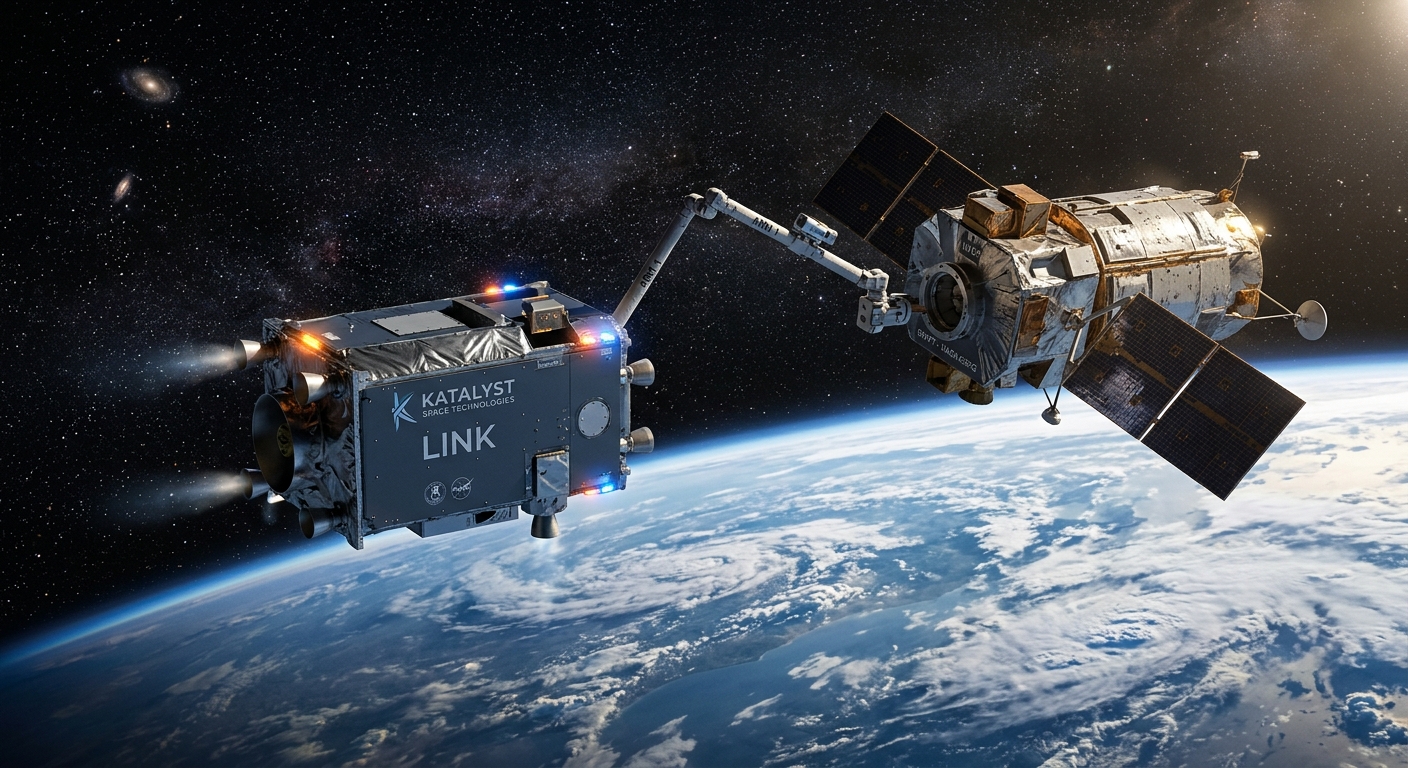
The James Webb Space Telescope (JWST) and Neil Gehrels Swift Observatory are pivotal NASA instruments facing operational challenges. JWST struggles with its Mid-Infrared Instrument, while Swift encounters orbital decay and mechanical failures. Katalyst Space Technologies aims to offer solutions by deploying a robotic spacecraft, LINK, to autonomously enhance the Swift Observatory’s orbit, potentially extending its operational lifespan. This mission represents a shift in NASA’s collaborative approach with innovative private companies, addressing complex space asset management challenges. While positive discussions about the mission are prevalent, experts remind us of the inherent risks tied to pioneering technologies.
Background
The JWST began its mission successfully, but technical issues with its Mid-Infrared Instrument emerged shortly after. Concurrently, the Swift Observatory entered a precarious state after losing two gyroscopes and facing orbit decay due to atmospheric drag, prompting urgent mission life-extending strategies. This situation has intensified interest in in-orbit servicing technologies, which leverage advanced robotics and AI to maintain aging spacecraft. Katalyst Space Technologies is preparing solutions to address these difficulties by readying their spacecraft for critical testing, positioning itself as a frontrunner in this evolving landscape.
The Startup
Katalyst Space Technologies, founded in 2019, aims to revolutionize space operations with advanced robotic systems for servicing satellites. Their acquisition of Atomos Space has reinforced their capabilities and positioned them as key players in the aerospace ecosystem. The company’s focus on providing cost-effective alternatives to satellite launches through life extension solutions has garnered attention from NASA and other defense sectors, indicating a growing reliance on agile startups for complex space missions. Their innovative engagement has opened new avenues for practical applications in satellite servicing.
The Rescue Mission
Nasa’s mission to rescue the Swift Observatory involves deploying Katalyst’s LINK spacecraft to autonomously boost Swift’s orbit, countering its orbital decay. The mission’s technique, “assisted rendezvous and proximity operations” (RPO), addresses the challenges of docking a spacecraft not originally designed for such tasks. Funded through a substantial NASA contract, LINK has undergone rigorous pre-launch testing to validate its capabilities. Success in this mission could set a precedent for future orbital servicing, showcasing the potential for rapid-response solutions in maintaining aging satellites.
Technical and Operational Challenges
The mission to service Swift faces time-sensitive challenges due to its deteriorating orbit, imposing strict timelines on testing and launch readiness. Balancing thorough preparation with urgency, Katalyst is innovating under pressure, altering traditional risk management strategies to meet the mission demands. Historical precedents of NASA’s servicing attempts reveal similar complexities, making establishing effective operational protocols critical. Uncertainties surrounding orbital factors and swift execution highlight the pressing need for flexibility and robust planning in such pioneering missions.
Collaboration with NASA and Other Entities
Nasa’s partnerships with startups signal a transformative approach to mission execution, reflecting agility in addressing urgent challenges. The collaboration between NASA and Katalyst emphasizes significant technical cooperation, with rigorous testing at NASA’s facilities contributing to mission readiness. Katalyst’s developments align with broader defense strategies, showcasing how public-private collaborations can foster rapid advancements in space technology and enhance operational capabilities.
Funding and Resource Management
Nasa fosters small businesses, offering support for technological advancement alongside its established partnerships. While NASA initiatives encourage innovation, challenges in funding allocation and cost management persist, necessitating regular updates and analysis to minimize project risks. The integration of subscription models by the U.S. Space Force indicates a shift towards more efficient procurement strategies, demonstrating the evolving landscape of resource management in supporting space missions. As ambitious goals for future exploration emerge, effective funding alignment remains crucial.
Impact and Significance
The Swift Observatory rescue mission is poised to redefine space mission sustainability by extending the telescope’s operational life, shifting expectations for spacecraft longevity beyond original designs. This operation is critical not only for preserving scientific data but also for setting industry standards in spacecraft maintenance and support.
Public and Media Response
The response to NASA’s rescue mission has shown a mix of optimism and skepticism, highlighting the innovative aspects of this unprecedented endeavor. The collaboration with Katalyst illustrates a willingness to engage with nimble startups, showcasing the potential for creative solutions in urgent scenarios. This shift in NASA’s approach underscores the importance of public-private partnerships in evolving the space industry and creating new opportunities for technological advancements.
Future Prospects
The mission to enhance the Swift Observatory marks a significant shift in in-orbit servicing capabilities, demonstrating the feasibility of advanced maintenance operations. As the industry progresses toward integrating robotics and AI-driven solutions, future missions may see more standardized designs that accommodate ongoing maintenance. If successful, Katalyst’s efforts could reshape approaches to spacecraft longevity, paving the way for future technological innovations in space exploration.
The content is provided by Jordan Fields, Anchor Press