
Summary
Deliciously Egg-citing Discover Our Top 3 Egg Recipes explores the culinary versatility, cultural significance, and nutritional value of eggs, while presenting three standout recipes that highlight their diverse preparation methods. Eggs are a fundamental ingredient worldwide, appreciated for their adaptability in dishes ranging from simple breakfasts to elaborate meals and desserts. Their ability to be cooked in numerous ways—such as boiling, frying, scrambling, poaching, and baking—makes them indispensable in kitchens across cultures.
Nutritionally, eggs are notable for their high-quality protein content and a broad spectrum of essential vitamins and minerals, including vitamins A, D, E, K, B6, B12, folate, choline, and omega-3 fatty acids. Despite historical concerns about cholesterol, current dietary guidelines generally support the consumption of one to two eggs daily for healthy adults, emphasizing moderation and balanced fat intake. This evolving understanding underscores the ongoing dialogue between nutritional science and dietary recommendations regarding eggs’ health impacts.
Culturally, eggs hold a prominent place in various regional cuisines, symbolizing tradition and innovation alike. For example, Japan’s tamagoyaki—a rolled omelette—reflects meticulous culinary artistry and regional flavor variations. East Asian soy sauce eggs showcase the integration of soy-based marinades that enhance umami richness, while Hong Kong’s silky scrambled eggs embody a fusion of Western and Cantonese influences. Additionally, inventive street food recipes, such as Indian skillet-cooked egg sandwiches, demonstrate eggs’ adaptability and global appeal.
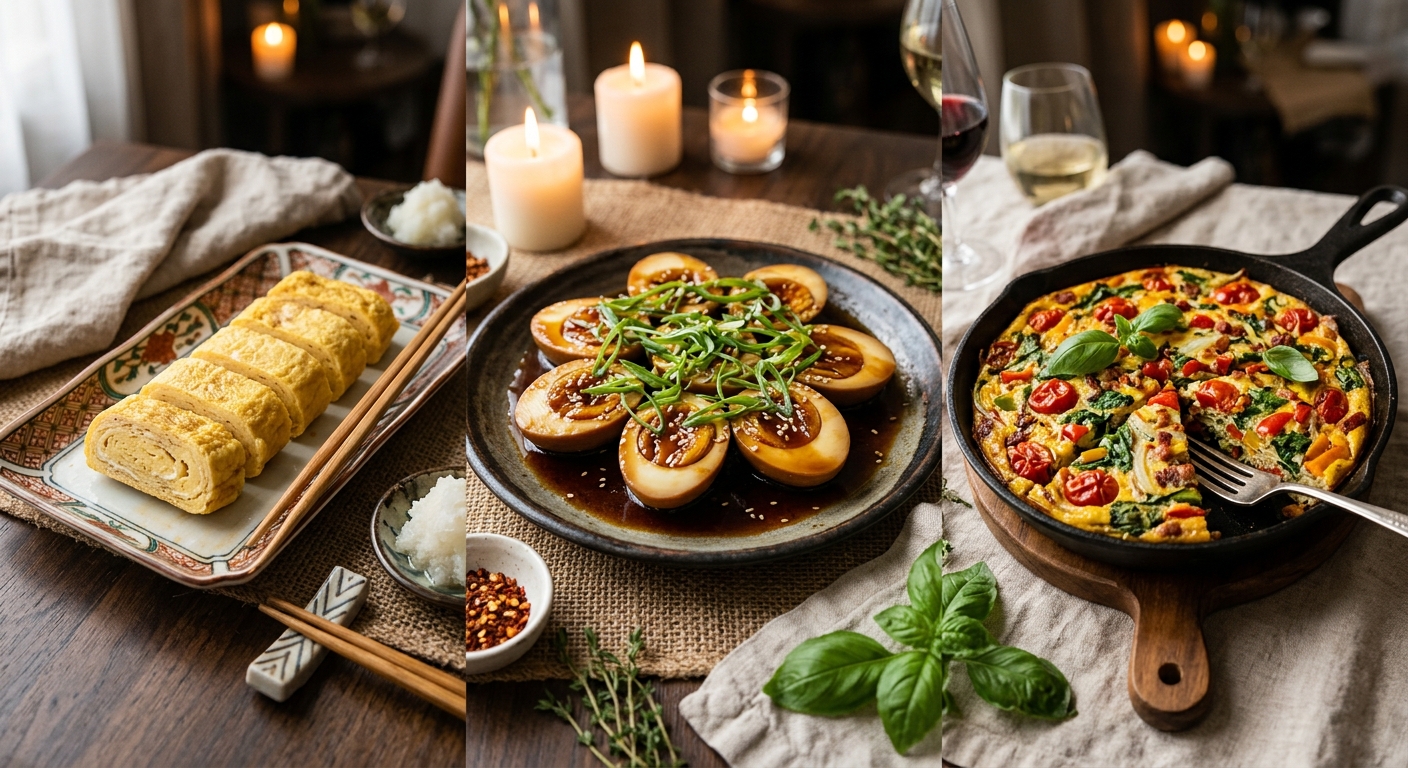
The article culminates by presenting three top egg recipes—Soy Sauce Eggs, Tamagoyaki, and Egg Frittata with Vegetables and Pancetta—each illustrating unique cooking techniques and flavor profiles that celebrate eggs’ versatility and cultural resonance. These recipes, alongside broader discussions of egg preparation methods, health considerations, and cultural contexts, provide a comprehensive overview that underscores why eggs remain a beloved and essential ingredient worldwide.
Overview of Eggs in Cuisine
Eggs are a versatile ingredient enjoyed in various culinary traditions around the world, featured in dishes for breakfast, lunch, dinner, and even dessert. They can be prepared in numerous ways, including boiling (such as hard-boiled eggs), frying, scrambling, poaching, or baking into dishes like omelets, frittatas, egg bakes, and egg salads. Their adaptability allows them to be incorporated into both simple and elaborate recipes, making eggs a staple in many kitchens globally.
Nutritionally, eggs offer high-quality protein and a wide range of essential nutrients. One large egg contains roughly 72 calories, with a macronutrient breakdown of approximately 2% carbohydrates, 62% fat, and 36% protein. Eggs are rich sources of vitamins and minerals such as vitamin A, D, E, K, B6, B12, folate, choline, calcium, phosphorus, potassium, selenium, and omega-3 fatty acids. Particularly notable are vitamin D and choline, which are relatively rare in many other foods and support bone and brain health respectively.
Despite earlier dietary concerns about cholesterol, especially in egg yolks, current research and guidelines suggest that consuming one to two eggs per day is safe for most healthy adults. The American Heart Association highlights that eggs contain both saturated fats and beneficial unsaturated fats, which can help balance blood cholesterol levels when consumed in moderation.
Globally, eggs feature prominently in culturally distinctive dishes. For example, Japan’s tamagoyaki, a rolled omelette, has been creatively reimagined with ingredients like seaweed, truffle, or cheese while maintaining its traditional essence. In Hong Kong, the egg scramble served in Cha Chaan Teng diners is enriched with cornstarch and evaporated milk to achieve a silky texture, reflecting a fusion of Western and Cantonese influences. Chinese cuisine often includes eggs marinated in a spiced soy-based sauce called “卤水,” a technique that enhances the flavor of eggs alongside other ingredients like meat and root vegetables. Additionally, Indian street food incorporates eggs into sandwiches cooked in skillets, blending textures reminiscent of French toast and grilled cheese for a uniquely satisfying dish.
Top 3 Egg Recipes
Eggs are incredibly versatile and beloved across cultures, offering a variety of delicious preparations. Here are three standout egg recipes that highlight different styles and flavors.
Soy Sauce Eggs
Soy sauce eggs, also known as ajitsuke tamago or nitamago in Japan, are soft-boiled eggs marinated in a savory, umami-rich broth often seasoned with soy sauce and Chinese five-spice. These eggs have a perfect balance of salty, sweet, and tangy flavors and are commonly served as ramen toppings or enjoyed as a snack. Variations of this recipe include the Chinese “dizef roti mimosa,” which fuses soy egg preparation with egg mimosa techniques. The marinade and cooking methods create a delicate yet flavorful egg that’s become a popular comfort food across East Asia.
Tamagoyaki (Japanese Rolled Omelette)
Tamagoyaki is a traditional Japanese rolled omelette cooked in a special rectangular pan, resulting in a slightly sweet, savory, and fluffy dish. The omelette is made by layering thin sheets of egg, often seasoned with sugar, mirin, and dashi broth. Regional differences exist: the Kanto region favors a thicker, sweeter version called atsuyaki tamago, while Kansai-style dashimaki tamago incorporates dashi for a softer texture. Tamagoyaki holds significant cultural importance in Japan and is commonly served in bento boxes, sushi, and traditional breakfasts. Its balance of flavors and intricate technique make it a culinary staple.
Egg Frittata with Vegetables and Pancetta
A frittata is a versatile Italian-style egg dish that is cooked slowly to achieve a custardy, creamy texture with a lightly browned top. This particular recipe elevates a classic frittata by incorporating spaghetti and pancetta, infusing the dish with savory richness. It also lends itself well to including a variety of vegetables such as bell peppers, spinach, and sun-dried tomatoes, making it a nutritious and flavorful option for any meal. The slow cooking method distinguishes it from quicker omelets, resulting in a satisfying and elegant egg dish.
Additional Popular Egg Recipes
In addition to classic preparations, several unique and culturally rich egg dishes have gained popularity worldwide for their distinctive flavors and cooking techniques.
One widely enjoyed recipe is the Hong Kong style scrambled eggs, known for its creamy, velvety texture and custardy consistency. This version uses simple ingredients that create a rich, fluffy dish that cooks rapidly, often in about 15 seconds. It is traditionally served with toast and hot coffee milk tea, making it a beloved breakfast choice in Hong Kong.
Another inventive egg dish inspired by street food is the egg sandwich cooked entirely in one skillet, combining elements of French toast and grilled cheese. This recipe, influenced by a viral Indian street vendor video, involves whisking eggs with scallions and water, then cooking the mixture with bread and cheese in a single pan. The result is a gooey, scrumptious meal suitable for any time of day and easily customizable with various breads, cheeses, and seasonings.
These additional recipes showcase the versatility of eggs in global cuisines, from the silky textures of Hong Kong scrambled eggs to the comforting hybrid of the skillet egg sandwich. Each dish reflects unique cultural influences while offering delicious ways to enjoy this everyday ingredient.
Health Benefits and Nutritional Considerations
Eggs are a nutrient-dense food, providing high-quality protein along with a variety of essential vitamins and minerals that support overall health. They are one of the few natural sources of vitamin D, with one egg supplying about 10% of the recommended daily intake (41 IU), primarily found in the yolk. Additionally, egg yolks contain important B vitamins such as B6, B12, folic acid, and pantothenic acid, as well as fat-soluble vitamins A, D, E, and K. They also provide minerals including calcium, iron, selenium, zinc, and phosphorus.
While egg whites are an excellent source of protein and low in calories and fat, nearly half of the protein content and most of the micronutrients reside in the yolk. Egg yolks also contain cholesterol, which for decades was thought to contribute significantly to heart disease risk. Since the 1960s, dietary guidelines have recommended limiting cholesterol intake to no more than 300 mg per day, with egg yolks viewed as a potent source. However, more recent evidence suggests that saturated fats in foods such as fatty meats, butter, and cheese have a greater impact on raising low-density lipoprotein (LDL) cholesterol than eggs do.
Eggs contain a mix of fats, including saturated fat, but also beneficial polyunsaturated and monounsaturated fats. These “good” fats can help lower LDL cholesterol and promote heart health. The American Heart Association states that healthy adults can safely consume one to two eggs daily, balancing cholesterol intake with overall dietary patterns and saturated fat limits.
Furthermore, eggs provide choline, a nutrient critical for brain health, which is relatively scarce in many other foods. While eggs offer many nutritional advantages, experts caution against excessive consumption, advising moderation to optimize health benefits without exceeding recommended cholesterol and saturated fat limits.
Cultural Significance of Egg Dishes
Egg dishes hold a unique place in various culinary traditions around the world, often reflecting local tastes, histories, and social customs. For example, deviled eggs are a popular appetizer in many Western cultures, celebrated for their simplicity and crowd-pleasing flavor combination of mayonnaise, mustard, pickles, vinegar, and a hint of sugar. These dishes frequently appear at social gatherings, symbolizing hospitality and communal enjoyment.
In East Asia, egg dishes take on distinct cultural meanings tied to local ingredients and cooking methods. The use of soy sauce, a staple condiment with deep historical roots, is central to many Asian egg preparations. The practice of marinating eggs and other ingredients in soy sauce and spices, known as “卤” (lǔ), is common in Chinese cuisine and is associated with everyday foods such as eggs, chicken feet, and lotus roots. Soy sauce itself transcends mere seasoning; it serves as an identity food that connects people to their cultural heritage and memories, playing a significant role in East Asian state building and collective identity.
Japanese egg dishes like tamagoyaki showcase the fusion of culinary artistry and tradition. This rolled omelette, often prepared with multiple thin layers to achieve a delicate texture, can be found in various regional variations such as atsuyaki tamago, which is thicker and sometimes seasoned with local ingredients like mentaiko—a spicy cured pollock roe reflecting the bold flavors favored in certain prefectures. Modern chefs continue to reinterpret tamagoyaki by incorporating novel ingredients like seaweed, truffle, or cheese, demonstrating the dish’s adaptability while honoring its Japanese roots.
Similarly, in Hong Kong’s vibrant culinary landscape, egg dishes such as scrambled eggs are influenced by the Cha Chaan Teng culture—casual eateries serving Western-style fare with Cantonese twists. Recipes from this tradition often use ingredients like cornstarch and evaporated milk to create a distinctive silky texture, embodying the fusion of East and West that characterizes Hong Kong’s food scene.
These examples illustrate that egg dishes are not merely food items but are embedded with cultural significance, symbolizing identity, tradition, and innovation across different societies.
Cooking Tips and Techniques for Eggs
Eggs can be prepared in a wide variety of ways, each requiring specific techniques to achieve the desired texture and flavor. Common methods include boiling eggs in their shells to make hard-boiled eggs, frying, scrambling, poaching, pickling, and incorporating them into dishes such as omelets and frittatas. Mastering these techniques ensures eggs are both delicious and visually appealing.
When scrambling eggs, it is important to use a gentle, continuous stirring motion around the pan, ideally with a rubber spatula, to push the egg mixture toward the center. This technique helps create soft curds while keeping the eggs slightly runny, yielding a creamy, custardy texture typical of styles such as Hong Kong scrambled eggs. Overcooking should be avoided to preserve this softness.
For fried eggs, precision is key to achieve perfectly melted cheese with runny yolks, especially in dishes like grilled cheese and egg sandwiches. Using tools such as a biscuit cutter or Mason jar ring to create bread shapes allows eggs to cook neatly inside the bread. Pre-toasting the bread can prevent overcooking the eggs while maintaining the desired gooey texture.
Japanese egg preparations such as Tamagoyaki highlight the importance of presentation and technique. The egg is layered and rolled into golden rectangles that reveal intricate folds, reflecting the Japanese culinary philosophy of pleasing all the senses. Variations like Atsuyaki tamago present thicker layers with fewer rolls, emphasizing regional preferences.
Other culinary cultures emphasize unique egg cooking methods as well. Korean Steamed Eggs (Gyeran Jjim) are praised for their fluffy and flavorful qualities and are considered an easy way to enjoy eggs at any meal. Additionally, marinated eggs, such as Japanese shoyu eggs, rely on careful boiling and flavor-infusing marinades with ingredients like ginger, garlic, toasted sesame oil, and coconut brown sugar dissolved in hot water to achieve a balanced umami taste.
The content is provided by Avery Redwood, Anchor Press