Summary
Make the Most of Your Extended Weekend explores the concept, cultural significance, and practical strategies for maximizing the benefits of weekends that extend beyond the traditional two-day break. Extended weekends, which often occur due to adjacent public holidays or flexible work arrangements, provide valuable opportunities for rest, leisure, productivity, and personal growth. This article examines the historical evolution of weekends, diverse cultural practices worldwide, and contemporary approaches to planning and utilizing extended weekends effectively.
The weekend as a concept has deep historical roots, influenced by religious observances and labor movements that shaped modern workweek structures, particularly in Western countries where Saturday and Sunday are standard days off. However, variations exist globally, with some Muslim-majority countries observing Friday–Saturday weekends and others adopting hybrid models to accommodate religious and economic needs. Recent trends toward flexible work schedules and experimental shorter workweeks highlight ongoing efforts to improve work-life balance and employee well-being.
Making the most of an extended weekend involves a balance of intentional planning, time management, and incorporating activities that promote relaxation and rejuvenation. Techniques such as goal-setting, batching tasks, physical exercise, and engaging in micro-adventures can help individuals optimize their time off and return to work refreshed. Additionally, cultural and regional customs, workplace policies, and social practices shape how extended weekends are experienced and utilized, reflecting broader societal values around leisure and productivity.
Despite their benefits, extended weekends also present challenges, including managing work-life boundaries, safety during travel, and ensuring equitable access in diverse labor markets. The article also addresses the economic and social impacts of extended weekends, which have been linked to increased consumption, job creation, and improved mental health. By understanding the multifaceted nature of extended weekends, individuals and organizations can better harness these periods for personal fulfillment and collective well-being.
Historical and Cultural Context
The concept of the weekend has evolved over centuries, shaped by a mixture of cultural, religious, economic, and social factors. Its origins trace back to ancient civilizations such as the Babylonians, who observed seven celestial bodies and divided time into seven-day cycles. This seven-day week eventually merged with religious customs across various cultures, including Christianity’s designation of Sunday as a day of rest, Judaism’s observance of Saturday, and Islam’s recognition of Friday as a holy day.
During the 19th century, the modern weekend began to take form through a series of labor movements and legislative changes. Governments enacted laws to reduce working hours and mandate breaks, but the establishment of the weekend was also driven by campaigns from half-day holiday movements, trade unions, commercial leisure companies, and even employers themselves. For instance, the Amalgamated Clothing Workers of America in 1929 became the first union in the United States to successfully demand a five-day workweek, influencing wider adoption across industries and regions.
In the United States, the two-day weekend was solidified nationally with the Fair Labor Standards Act of 1938, which mandated a maximum 40-hour workweek and contributed to the widespread acceptance of Saturday and Sunday as days off. However, actual working hours often exceed this standard, with many full-time employees working an average of 47 hours per week. Retail and service sectors commonly remain open during weekends, reflecting ongoing variations in workweek practices.
Globally, variations in weekend structure still exist, largely influenced by religious and cultural traditions. Many Muslim-majority countries, for example, observe Friday and Saturday as weekend days to accommodate Friday prayers, while others align with the traditional Western weekend of Saturday and Sunday. These differences highlight how the weekend is not a fixed concept but one adapted to fit societal norms and religious observances.
In recent times, the significance of the weekend as a time for rest and personal rejuvenation has been reinforced, even as some countries experiment with shorter workweeks. Nations like Belgium, Iceland, the United Kingdom, and France have piloted or planned four-day workweeks to enhance work-life balance and address social needs such as childcare flexibility. Despite these innovations, the two-day weekend remains a cultural mainstay and a symbol of respite from work obligations.
Additionally, the evolution of holidays themselves demonstrates how civic engagement and cultural shifts continue to shape leisure time. Holidays have become more inclusive and diverse, reflecting changes in societal values and demographics. For example, celebrations such as Kwanzaa and the increased public prominence of Hanukkah illustrate how cultural identity and historical context influence modern observances. Similarly, holidays like Labor Day and Earth Day serve as platforms for advocacy and renewed public awareness, linking leisure time with broader social and environmental issues.
Types and Definitions of Extended Weekends
Extended weekends generally refer to weekends that are longer than the traditional two-day period of Saturday and Sunday. One common definition describes an extended weekend as a Saturday and the following Sunday that guarantees a minimum of 79.75 hours off duty, provided that not more than one hour is worked on the last day of the extended weekend. In some agreements, the extended weekend may also include stipulations such as no more than six consecutive scheduled days of work preceding it.
Another broader interpretation includes weekends that are lengthened by adjacent holidays, such as a Friday or a Monday off, creating a longer break from work or school. This type of extended weekend is often recognized when public or unofficial holidays fall immediately before or after the standard weekend, thus providing at least a three-day weekend. For example, a long weekend typically includes an extra day on either side of the regular weekend due to holidays, effectively extending the time off.
In various cultures and countries, extended weekends are further influenced by specific local customs and policies. Some regions observe “bridge holidays” or “puentes,” which connect a midweek holiday to a weekend, thereby creating longer breaks. Countries such as Mexico, Brazil, Argentina, Colombia, Japan, Thailand, and Malaysia frequently experience these extended weekends through Monday-observed holidays or substitution rules. Similarly, Gulf countries may have 3–5 day weekends during Eid or national days, with announcements often made close to the holiday dates.
Planning and Making the Most of an Extended Weekend
Maximizing the benefits of an extended weekend requires a balanced approach that combines productivity with relaxation. Effective planning ahead of time plays a crucial role in ensuring that the weekend is both fulfilling and rejuvenating. Spending as little as 30 minutes preparing your schedule before the weekend begins can significantly reduce stress and increase overall productivity.
Time Management Techniques
Organize your days into solid blocks of focused time, dedicating each block to a single task or type of activity. Batching similar tasks together—such as handling all emails at once or scheduling meetings back-to-back—enhances efficiency and minimizes distractions. Employing proven time management methods like the Pomodoro Technique, which involves working in concentrated intervals followed by short breaks, can improve focus while allowing necessary mental rest.
Setting Intentional Goals and Priorities
Start by assessing your personal needs and energy levels. Determine whether you require more rest or wish to tackle certain tasks. Setting a few intentional goals—whether small enjoyable activities or pending tasks—helps provide structure without sacrificing relaxation. Prioritize rest as much as productivity, recognizing that downtime is essential to recharge and return to work energized.
Incorporating Micro-Adventures and Physical Activity
To keep weekends refreshing and memorable, consider scheduling micro-adventures like hikes, concerts, or visits to new local spots rather than sticking to routine activities. Physical activity is highly recommended, as exercise not only boosts energy and productivity but also elevates overall happiness and well-being. Avoid sedentary habits such as lounging on the couch for prolonged periods by engaging in activities that promote movement.
Balancing Work and Leisure
An extended weekend offers an opportunity to achieve better work-life harmony by blending productive tasks with leisure and self-care. Plan activities such as reading, pursuing hobbies, or spending quality time with family and friends. This balanced approach prevents burnout and makes the weekend more satisfying and restorative. When traveling, organize daily itineraries and book reservations in advance to make the most out of your trip and avoid feeling like you only just arrived and left.
Budget-Friendly Enjoyment
A common barrier to weekend enjoyment is budget constraints, but fun and fulfilling activities do not always require significant spending. Creative and low-cost options can provide memorable experiences without financial stress, making it easier to consistently enjoy weekends regardless of budget.
By planning intentionally, managing time effectively, and blending productive and leisure activities, you can transform your extended weekends into a period of meaningful rest and accomplishment, setting a positive tone for the upcoming week.
Common Uses and Activities
Extended weekends offer an excellent opportunity to break from the regular work routine and engage in activities that promote relaxation, personal growth, and quality time with loved ones. Many individuals use this time to balance professional obligations with personal interests, leveraging flexible schedules to rejuvenate and pursue hobbies.
One popular way to spend an extended weekend is by planning short road trips to nearby destinations. These trips, typically within a 2–3 hour drive, allow travelers to maximize their time enjoying the location rather than spending excessive time on transit. For longer distances, flying may be preferable depending on cost and convenience. Strategically planning daily activities and booking reservations can transform a weekend getaway into a mini-vacation experience. Destinations like Aspen, Bend, or Whistler are often recommended for their natural beauty and recreational opportunities.
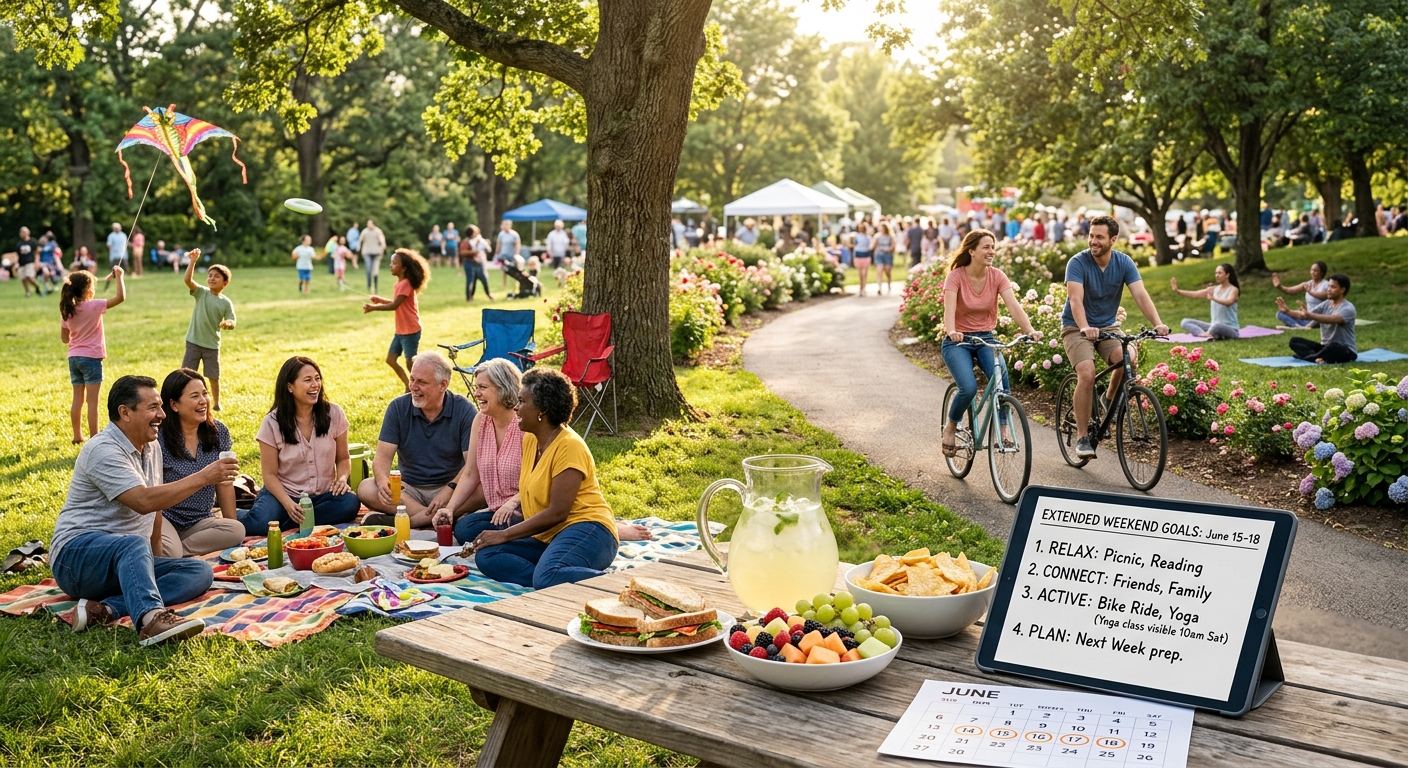
Weekend activities vary widely based on energy levels, budget, and personal preferences. Some enjoy peaceful pursuits at home, while others seek outdoor adventures or social outings with friends. Popular ideas include picnics, which serve as a refreshing way to refuel between events, and engaging in creative hobbies such as music, painting, or writing, which stimulate new ways of thinking and help alleviate stress. Volunteering is another fulfilling option that contributes to personal growth and community well-being.
To make the most of extended weekends, many advocate for intentional scheduling that balances rest, social connection, and productivity. Visual time management techniques can help preserve the restorative nature of weekends, preventing them from slipping away unproductively. Ultimately, the goal is to use this time to recharge and return to the workweek with renewed energy and focus.
Cultural and Regional Practices
The concept of the weekend and extended breaks varies significantly across cultures and regions, reflecting religious traditions, historical developments, and socio-economic factors. Many countries observe a two-day weekend, typically Saturday and Sunday, aligning with Christian customs that designate Sunday as a day of rest. However, other religious and cultural practices have shaped different weekend structures, such as Friday–Saturday weekends in many Muslim-majority countries, where Friday holds religious significance, and Saturday–Sunday weekends in Jewish and Christian contexts.
Several nations have adapted their weekend arrangements over time to better synchronize with international markets and global economic systems. From the mid-20th century onward, numerous countries shifted their weekends to Friday–Saturday or Saturday–Sunday patterns, with many Arab states adopting hybrid models that balance religious observance with commercial needs. This includes maintaining shorter working hours on Fridays to accommodate prayer, while aligning the rest of the week with global standards.
Public holidays and their clustering around weekends differ worldwide. For example, countries like China, Russia, Turkey, and South Korea feature significant holiday clusters—such as China’s two Golden Weeks and Turkey’s extended Bayram celebrations—resulting in multi-day breaks that extend beyond typical weekends. In contrast, countries like the United Kingdom, Ireland, the United States, and Canada tend to have more evenly spaced holidays with fewer clusters, often resulting in predictable long weekends. Additionally, nations such as Colombia, Japan, Thailand, and Malaysia frequently observe “substitution” or “Monday-observed” holidays, increasing the number of long weekends available to workers.
“Bridge days” or “squeeze days” are common practices in several cultures to create extended weekends by taking a working day off between a holiday and the weekend. For instance, Sweden refers to these as “squeeze days,” Chile calls it “taking the sandwich,” and France widely allows employees to take a Friday off when a public holiday falls on a Thursday. While the United States does not have official “bridge” holidays nationally, federal holidays result in government office closures and paid leave for federal employees, with private-sector practices varying by employer.
Holiday observance also reflects cultural inclusivity and historical evolution. Some holidays have broadened in scope, becoming celebrated beyond their original religious contexts. Christmas, once primarily a Christian religious holiday, is now widely observed by secular families. Hanukkah, traditionally a minor Jewish observance, has gained prominence in public awareness partly due to its timing near Christmas. Similarly, Kwanzaa, established in the 1960s, offers African Americans a cultural celebration emphasizing heritage and unity.
The rise of remote and hybrid work models has further complicated the understanding of weekends and holidays, as employees increasingly work across different time zones and cultural calendars. Awareness of local weekends and public holidays is essential for global teams to function effectively, fostering respect for diverse cultural rhythms and enabling better collaboration. This dynamic environment encourages the use of tools that automatically display local holidays and weekends, helping bridge cultural and temporal divides in the modern workforce.
Workplace Policies and Labor Laws
Workplace policies and labor laws play a significant role in shaping how employees can utilize extended weekends. Flexible work arrangements, such as flexible work schedules, compressed workweeks, and remote work, are primarily governed by agreements between employers and employees rather than federal mandates. The Fair Labor Standards Act (FLSA) does not address flexible work schedules, leaving the adoption and regulation of such arrangements to company policies and state laws.
Holiday pay is another important aspect affecting extended weekends. While many employers offer holiday pay, it is not required under U.S. federal law, and the FLSA does not mandate private companies to provide compensation for federal holidays. Instead, holiday pay policies depend largely on state laws, industry practices, union contracts, and individual company policies. Employees not covered by union contracts often receive only their standard pay when working on federal holidays, unless company policies dictate otherwise.
Various flexible work options have emerged to support both business needs and employee work-life balance. These include annualized hours, where employees’ pay is based on total hours worked over a year with work schedules varying according to demand. Compressed workweeks condense the traditional 40-hour workweek into fewer than five days, often benefiting non-exempt employees when clearly defined maximum work hours are set. Remote work arrangements also allow employees to perform their duties outside the office, sometimes with flexibility in hours, further enhancing opportunities to make the most of extended weekends.
State laws and company policies add complexity to the legal landscape surrounding work hours and holiday pay, requiring employers to be well-informed to ensure compliance and fair treatment of employees. Understanding these nuances enables organizations and employees to better navigate the options available for optimizing rest and productivity during extended weekends.
Social and Economic Impacts
The implementation of extended weekends, such as the Two-Day Weekend Policy introduced in China in 1995, has had significant social and economic effects. This policy, which reduced the standard working week from six to five days, aimed to encourage consumption, stimulate the economy, and generate employment opportunities, particularly for workers displaced by state-owned enterprise reforms initiated in the early 1990s. The policy’s success in reducing employment inequality was largely driven by increased job flexibility, the growth of the tertiary sector, and reduced information frictions in the labor market. These benefits were more pronounced in economically advanced regions such as the eastern provinces, areas with higher human capital, and municipalities governed directly by the central government.
On a broader scale, organizations adapting to extended weekends have increasingly adopted flexible working arrangements tailored to employee needs. Such personalized approaches balance productivity with employee well-being, leading to improvements in health, happiness, and overall performance. This shift is supported by cultural observations that
Safety, Health, and Well-Being
Taking full advantage of an extended weekend involves prioritizing safety, health, and well-being to ensure a restorative and enjoyable break. One critical aspect is addressing the unique challenges remote work can bring, such as burnout, loneliness, and stress. Offering targeted support like employee wellness programs, access to employee assistance programs (EAP), or mental health resources such as tele-therapy can significantly help employees manage these challenges effectively.
De-stressing and relaxing during the weekend are essential for reducing stress and improving overall physical and mental health. Engaging in restful activities can lead to better sleep, increased energy, improved relationships, and enhanced productivity during the following week. Incorporating outdoor activities is particularly beneficial, as spending time outside accelerates mental recovery from stress and boosts concentration, contributing to overall relaxation and health.
Physical activity should be an integral part of the extended weekend routine. Rather than succumbing to sedentary habits, engaging in exercise not only elevates energy and productivity but also enhances overall happiness. Combining relaxation with physical activity promotes a balanced approach to well-being, enabling individuals to return to work refreshed and motivated.
In addition to personal health practices, ensuring safety during travel associated with extended weekends is crucial. High travel volumes, especially around long weekends, demand careful planning to avoid stress and accidents. Being mindful of transportation safety and timing can help mitigate travel-related risks. Ultimately, investing time in self-care, relaxation, and safe practices during extended weekends fosters a sustainable balance between professional responsibilities and personal life, leading to improved long-term well-being.
The content is provided by Blake Sterling, Anchor Press