Justice Department Demands Answers: New York Times Journalists Under Fire for Air Force One Coverage
Understanding Government Actions Against Journalists
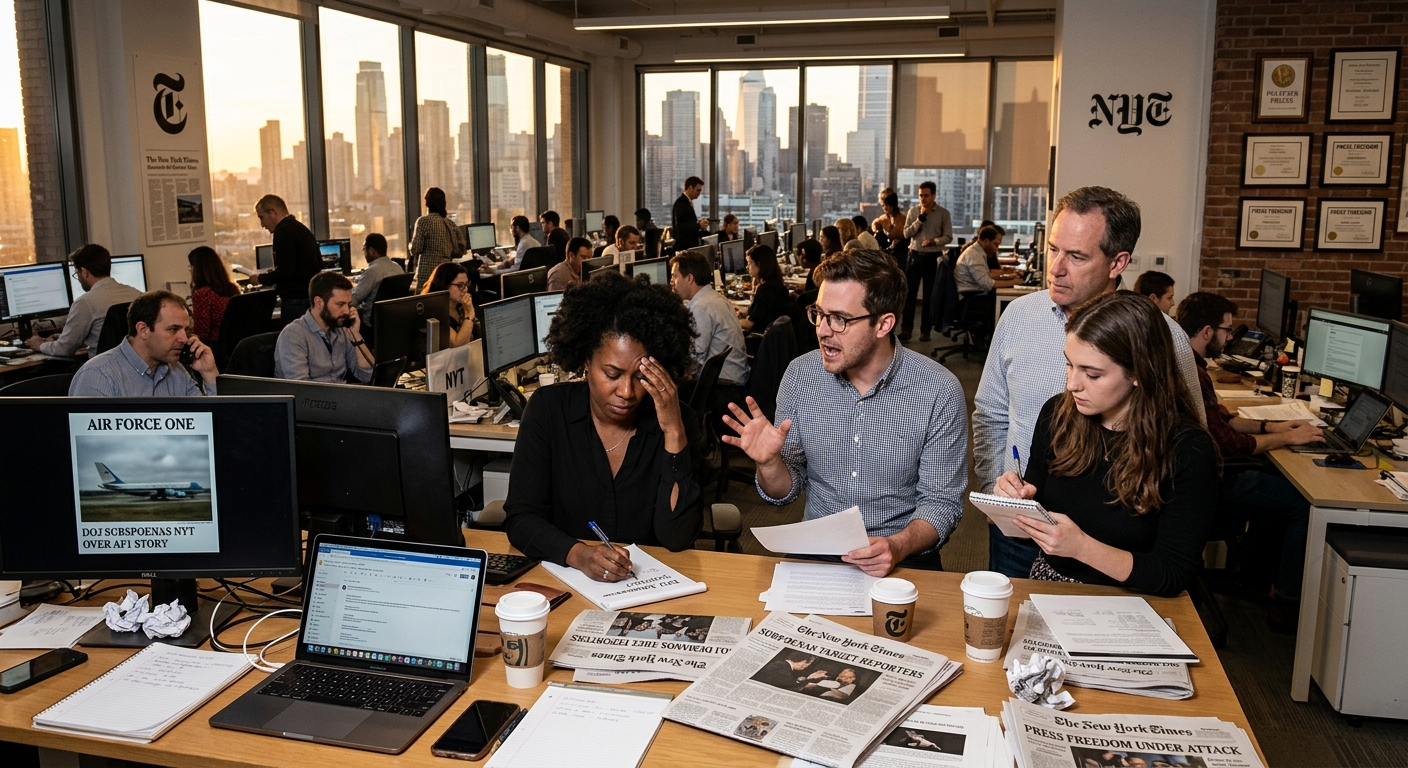
In early 2023, the U.S. Department of Justice (DOJ) issued subpoenas to several New York Times journalists, compelling them to testify before a federal grand jury in Manhattan. These subpoenas were part of an investigation into alleged leaks of classified information concerning security vulnerabilities in the new Air Force One aircraft, a gift from Qatar. This aggressive legal action followed a request from an FBI official to delay the story’s publication and demands for source disclosure, which the newspaper resisted, highlighting a significant tension between national security interests and press freedoms.
The DOJ maintained that its investigation targeted individuals responsible for leaking sensitive national security information, not the journalists themselves, emphasizing a dual commitment to protecting classified materials and respecting the free press. However, the use of subpoenas against reporters is an uncommon and contentious step, drawing widespread criticism from press freedom advocates, media organizations, and legal experts. Such actions are often perceived as attempts to intimidate journalists and suppress unfavorable media coverage, raising concerns about the government’s true intentions behind these investigations.
Impact on Investigative Reporting and Source Confidentiality
The DOJ’s subpoenas sparked widespread concern and condemnation, as critics argued that compelling journalists to reveal sources under threat of legal action fundamentally threatens a free press. This approach risks chilling investigative journalism, as potential sources may become hesitant to share crucial information if they fear their identities cannot be protected. Organizations like the National Press Club described the subpoenas as “one of the most aggressive actions against a free and independent press in recent memory,” underscoring the perceived threat to journalistic independence.
Press freedom advocates, including the Freedom of the Press Foundation, asserted that such government actions cause “irreparable harm” to the public’s right to know and the democratic values upon which the United States is built. They highlighted the critical role of journalists and whistleblowers in exposing government waste and incompetence, emphasizing that without protected sources, important governmental affairs might remain hidden. The incident intensified debates over source confidentiality and the broader challenges confronting U.S. media amid heightened governmental scrutiny and legal pressures related to national security reporting.
Navigating Legal Protections for Journalists
The legal landscape surrounding journalists’ rights, particularly concerning the protection of confidential sources, remains complex and unsettled, varying significantly across jurisdictions. While most courts recognize a qualified privilege under the First Amendment that shields journalists from compelled disclosure, this protection is neither absolute nor uniformly applied. This variability means that the extent to which journalists can refuse to reveal sources or information depends heavily on specific state laws and federal court interpretations.
As of 2018, 49 states and the District of Columbia have enacted some form of “shield law,” granting either absolute or qualified privileges to journalists, though Wyoming and Hawaii notably lack clear protections. These state laws typically require that the party seeking disclosure demonstrate that the information is relevant, material, and unobtainable from alternative sources before a journalist can be compelled to testify. However, despite longstanding efforts, Congress has yet to enact a comprehensive federal shield law, leaving federal investigations like the Air Force One leak probe subject to less consistent protections and greater judicial discretion.
Historically, the Justice Department has periodically updated its internal policies regarding subpoenas and search warrants against the news media, aiming to balance protecting sensitive information with upholding First Amendment rights. The Department issued new guidelines in 2022 to limit subpoenas for routine news materials, requiring high-level approvals and narrowly defined circumstances for their use against journalists. Despite these procedural safeguards, the continued use of compulsory legal processes against reporters in leak investigations remains controversial, fueling concerns about potential government overreach and its impact on press freedom.
Efforts to Strengthen Press Freedom Safeguards
In response to incidents like the subpoenas issued to The New York Times journalists, legislative efforts have emerged to provide stronger federal protections for the press. The proposed Protect Reporters from Exploitative State Spying (PRESS) Act aims to shield journalists from compelled disclosure of confidential information, except in narrowly defined cases involving terrorism or imminent harm. Advocates argue that such federal statutory safeguards are essential to prevent undue burdens on news organizations and preserve the flow of information vital to government accountability and an informed public.
The ongoing public and institutional debate over the proper limits of government power, the protection of journalistic sources, and the preservation of transparency in the face of national security concerns underscores the need for clearer legal frameworks. While some opponents of enhanced shield laws raise concerns about defining who qualifies as a journalist or the potential for governmental favoritism, proponents emphasize that granting reporters the right to refuse source disclosure serves the public interest. This legislative push reflects a broader effort to solidify constitutional press freedoms and ensure that an independent press can continue to serve as a cornerstone of American democracy.
The content is provided by Sierra Knightley, Anchor Press