Navigating a Trump-Free Future: How Utah Could Shape the Republican Partys Path Ahead
Summary
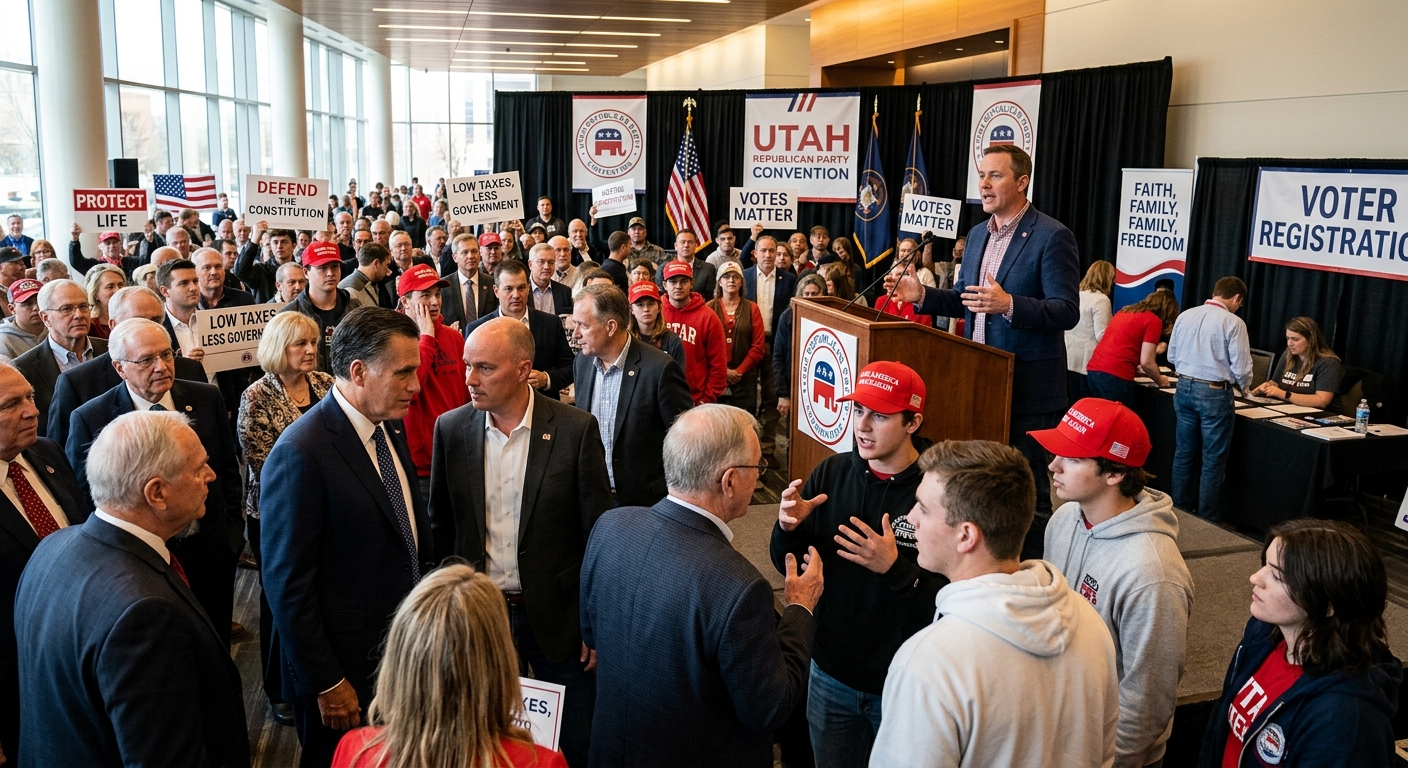
Navigating a Trump-Free Future: How Utah Could Shape the Republican Party’s Path Ahead examines the evolving political landscape of Utah’s Republican Party amid shifting national dynamics and internal ideological divisions. Historically a Republican stronghold influenced by the cultural values of The Church of Jesus Christ of Latter-day Saints (LDS Church), Utah presents a unique case study in how traditional conservatism intersects with emerging populist currents within the GOP. This article explores how these tensions play out locally, offering insights into broader transformations within American conservatism.
Utah’s Republican Party remains dominant, controlling a substantial majority of state legislative seats and holding the governorship. However, the party is deeply factionalized, split chiefly between a traditional conservative wing that emphasizes institutional stability and incremental governance, and a rising MAGA-aligned populist faction energized by former President Donald Trump’s influence. This internal conflict is reflected in high-profile leadership struggles, voter behavior, and party strategies, underscoring the challenges of maintaining unity in a politically polarized era.
Donald Trump’s impact on Utah’s GOP has been significant but nuanced. While his presidency spurred rapid voter registration growth and energized grassroots activism, his personal approval remains weaker among Utah’s electorate compared to other Republican-leaning states. Prominent local Republicans, including Governor Spencer Cox and Senator Mitt Romney, have sought to moderate the party’s direction and distance it from Trump’s more confrontational style, reflecting ongoing debates over the party’s identity and future course.
As Utah Republicans confront the prospect of a post-Trump era, the state’s political trajectory could serve as a bellwether for the national GOP. The interplay between entrenched conservative values, factional realignment, and emerging centrist alternatives like the Forward Party highlights the complexity of navigating internal divisions while preserving electoral dominance. This evolving dynamic raises important questions about the future of conservative governance in Utah and beyond.
Historical and Political Context
Utah’s political landscape has long been shaped by its unique cultural and religious composition, particularly the influence of The Church of Jesus Christ of Latter-day Saints (LDS Church). Historically, prior to achieving statehood, Utah was considered a Democratic-leaning territory, but this shifted rapidly following 1896 as the state emerged as a stronghold for the Republican Party. The party’s early opposition to polygamy and its role in the abolition of the practice helped solidify its appeal among Utah voters.
During the early 20th century, Republican dominance was concentrated in key counties such as Salt Lake, Weber, Davis, and Utah counties. The party’s control was further consolidated through semi-secretive factions like the “Order of Seven,” a group aimed at systematically expanding its influence and maintaining control over the state political system. Despite Republican strength, opposition arose with the formation of the American Party in 1904, organized by former Republican senator Thomas Kearns to counteract LDS Church influence in political and economic matters. The American Party achieved some success in Salt Lake City and Ogden City governments, reflecting an early tension between religious and political interests within the state.
Utah’s political dynamics were further complicated by the LDS Church’s significant role in shaping the state’s cultural values, particularly its emphasis on family, personal responsibility, and community engagement. While the church has historically supported conservative candidates and policies aligned with these principles, political views among its members are diverse, ranging from moderate to liberal stances. This multifaceted relationship contributes to a complex interplay between religion and politics in Utah.
In recent decades, the Republican Party has maintained overwhelming control of Utah’s political institutions. Republicans hold nearly 76% of the seats in the state Senate and 81% in the House of Representatives, with no Democrat elected statewide since 1996. Within this dominant party, however, there exists significant factionalism, especially highlighted by divisions over former President Donald Trump. Polls indicate a continuing split between traditional conservatives and a more hardline MAGA faction, underscoring ongoing ideological struggles within the Utah GOP.
Additionally, the state has witnessed growing political friction characterized by a divergence between Governor Spencer Cox’s moderate conservatism and the more rigid, right-wing priorities of the Utah legislature. This shift reflects a breakdown of the traditional “Utah Way,” which favored consensus-based policymaking, now replaced by increased public confrontation and partisan maneuvering. These internal tensions within the Utah GOP also mirror broader national trends of polarization and party purity tests.
New political movements have also emerged in response to this evolving context. The Forward Party of Utah, formed through a merger of the centrist United Utah Party and the Forward Party, seeks to offer an alternative to the entrenched two-party system. Currently, it has representation in the Utah State Legislature through Senator Daniel Thatcher, signaling the potential for shifting alliances and the gradual introduction of more centrist voices in state politics.
Republican Party Factions in Utah
The Republican Party of Utah, the state’s affiliate of the national Republican Party, remains dominant in Utah politics but is currently marked by significant internal divisions. These fissures largely reflect a broader national struggle within the GOP, manifesting locally as a tension between traditional conservatives and a rising populist MAGA (Make America Great Again) faction.
Traditional Conservatives vs. MAGA Faction
The traditional conservative wing of the Utah GOP emphasizes stability, incremental policy approaches, and adherence to institutional norms. This group includes moderate Republicans such as Governor Spencer Cox, who identifies as a “Ronald Reagan conservative” and seeks to bridge divides within the party by engaging with differing viewpoints. Cox’s moderate conservatism, however, has increasingly put him at odds with the more rigid right-wing priorities of the state legislature and the MAGA faction, provoking backlash from some conservatives who have called for his expulsion from the party.
Conversely, the MAGA faction prioritizes a more populist, ideologically driven agenda that often challenges traditional party institutions and norms as obstacles to achieving its goals. This group has gained momentum in recent election cycles, illustrated by candidates like Phil Lyman who ran on a “Make Utah Great Again” platform and secured significant support among conservative grassroots voters despite not winning statewide office. The MAGA wing also enjoys endorsements from figures such as former President Donald Trump, highlighting their influence within Utah’s Republican electorate.
Political Implications and Voter Dynamics
Polling indicates that while the Republican Party holds a commanding lead over Democrats in Utah—winning by a 30-point margin in statewide preference—internal factionalism remains pronounced. The electorate is split not only between MAGA and non-MAGA Republicans but also includes non-Republican voters whose concerns center on economic issues and governance priorities. This divergence complicates electoral strategies, as neither wing can secure statewide victories without appealing to a broader, more moderate voter base.
Efforts to navigate this factional divide have seen traditional conservatives, including prominent figures like Mitt Romney and political action committees such as the Governing Group founded by Becky Edwards, push for a more measured and institutional approach to politics that contrasts with the confrontational style favored by the populist wing. Whether this results in a realignment of political alliances or an eventual absorption of the traditionalist faction into the MAGA movement remains uncertain.
Broader Context
The current ideological struggle within Utah’s Republican Party reflects a larger transformation in American conservatism. The breakdown of the historically consensus-driven “Utah Way” of policymaking toward more overt partisan confrontation exemplifies this shift. Insurgent challenges, often driven by grassroots activists, have become mechanisms for holding incumbents accountable but also contribute to the elevation of more ideologically rigid candidates, intensifying internal party tensions.
Key Political Figures and Leadership Dynamics
Utah’s political landscape is currently shaped by a dynamic interplay between traditional Republican values and the evolving influence of former President Donald Trump. Governor Spencer Cox exemplifies a leadership style that contrasts sharply with Trump’s approach. Known for promoting civil discourse and unifying values, Cox has positioned himself as a national leader advocating for respectful dialogue amid increasing political divisiveness. His stance reflects a broader desire within parts of the Utah GOP to move beyond the confrontational politics often associated with Trump.
Senator Mike Lee represents another significant figure within Utah’s Republican ranks. Once a reluctant supporter of Trump in 2016, Lee has since become one of the president’s most vocal allies. However, political analysts note that full alignment with Trump has its limits in Utah’s political environment. Observers point to ongoing tensions within the party and highlight that Trump’s endorsement alone is insufficient for political success in the state, underscoring the nuanced and sometimes fractious nature of party leadership.
The shifting political currents have led to emerging efforts by other Republican leaders and groups aiming to steer the party toward a less divisive path. Notably, former Senator Mitt Romney and moderate Republicans have gained momentum, seeking to attract voters away from the MAGA wing by advocating for a more measured political engagement. These efforts manifest across multiple levels of Utah politics, including the founding of PACs like the Governing Group by Becky Edwards, which promotes candidates aligned with this vision.
Additionally, grassroots activism continues to play a pivotal role in shaping leadership and candidate selection within the Utah Republican Party. The state’s caucus and convention system encourages significant volunteer involvement and fosters accountability by enabling insurgent challenges to incumbents perceived as disconnected from local voters. This mechanism ensures that candidates remain closely tied to party values but can also lead to the rise of more ideologically driven figures.
Meanwhile, the political scene in Utah is further complicated by alternative movements such as the Forward Party of Utah, a centrist coalition that has begun contesting races and currently holds legislative representation. This development signals a growing appetite among some voters for political options beyond the traditional two-party framework.
Donald Trump’s Influence on Utah’s Republican Party
Donald Trump’s tenure has markedly reshaped the landscape of Utah’s Republican Party, making it the fastest-growing political party in the state during his presidency. The GOP added over 200,000 registered active voters, with Trump himself increasing his vote count by hundreds of thousands in the 2020 election compared to 2016, expanding his share of the electorate by double digits. This growth defied earlier projections that Utah might shift toward a more competitive or “purple” state; instead, the state trended further right under Trump’s influence, driven by strong grassroots conservative support.
Despite this momentum, the party remains ideologically divided. A faction of more traditional, courtly Republicans—including prominent figures such as Mitt Romney and Governor Spencer Cox—has sought to moderate the party’s tone and wrest influence away from Trump’s more populist MAGA wing. These efforts are often cautious and measured, as direct criticism of Trump remains politically sensitive. Initiatives like the Governing Group, a PAC founded in 2023 by former legislator Becky Edwards, exemplify attempts to steer the party toward a more institutional and incremental political engagement.
However, this internal tension is not seen as a deep rupture by all observers. While some Utah Republicans were initially slow to endorse Trump, many have since aligned with him, reflecting the complex dynamics within the party. Political analysts caution that Trump’s national style of politics—characterized by polarization and a strong populist appeal—may eventually pose broader challenges for Utah’s GOP, which has historically valued stability and decorum.
Grassroots activists continue to play a pivotal role in shaping the party’s direction. Their influence often favors more ideologically-driven candidates, ensuring that insurgent challenges remain a mechanism for accountability but also contribute to internal ideological divides. This grassroots strength is reflected in the party’s voter engagement, though recent primary turnout has not matched the record levels seen in 2020, indicating some fluctuation in enthusiasm despite a growing voter base.
Polls indicate that Utah voters show an even stronger preference for generic Republican candidates compared to Trump specifically. While Trump maintains solid support among the party-first faction of Republicans—around 76% favorable—his approval is significantly weaker among independents and virtually nonexistent among Democrats. This suggests that while Trump remains a dominant figure within the party, his broader appeal in Utah is limited, making his endorsements meaningful but less potent than in other red states.
Looking ahead, the future of Utah’s Republican Party involves navigating these internal tensions between the populist MAGA wing and more traditional conservatives. Whether this results in a genuine realignment or a synthesis of these factions remains uncertain, but the struggle mirrors larger national trends within the GOP. Utah’s unique political culture, which prizes stability, may both shape and be challenged by these evolving dynamics.
Internal Party Divisions and Factional Tensions
The Utah Republican Party has experienced significant internal divisions and factional tensions, reflecting broader national trends within the GOP. A key point of contention lies between the establishment wing, which emphasizes stability, institutional norms, and moderate conservatism, and a rising populist movement that prioritizes more rigid right-wing policies and often challenges traditional party structures. This ideological divergence is evident in the growing gap between Governor Cox’s moderate approach and the increasingly hardline priorities of the state legislature.
This factionalism within Utah’s GOP mirrors the national polarization seen in the Republican Party, where internal purity tests and confrontational politics are becoming more commonplace. The longstanding “Utah Way” of consensus-based policymaking has begun to erode, replaced by public confrontation and partisan maneuvering that disrupt previously cooperative governance. Whether this shift will lead to a permanent realignment within the party or a synthesis of traditionalist and populist elements remains uncertain.
Public opinion polling underscores these divides. While the Republican Party continues to dominate Utah politics, there is a clear split among Republicans over former President Donald Trump’s influence. Despite these divisions, many Utah Republicans still express support for their elected leaders, indicating a complex dynamic between party unity and factional differences. As the 2024 presidential election approached, some party leaders in Utah showed waning enthusiasm for Trump, instead rallying behind alternatives such as Florida Governor Ron DeSantis.
The party’s grassroots mechanisms also play a significant role in shaping internal dynamics. Utah’s caucus and convention system encourages deep involvement from thousands of grassroots volunteers, fostering a cohesive party that values ideological commitment. However, this system can also empower insurgent candidates who appeal to more ideologically-driven activists, sometimes at the expense of moderate incumbents. This dynamic contributes to the ideological tension within the party and influences candidate selection and policymaking.
Moreover, these internal tensions manifest in electoral contests and legislative control. Despite internal GOP divisions, Republicans have maintained significant control over state government, often holding legislative majorities and the governor’s office, though power-sharing agreements with Democrats have occasionally been necessary. The party’s internal divisions continue to shape both its political strategies and its prospects in upcoming elections.
Utah’s Unique Political Behavior Compared to National Trends
Utah’s political landscape exhibits a distinct divergence from national Republican trends, reflecting both ideological and cultural particularities. A key feature is the growing split within Utah’s conservative base between “principled” conservatives—who emphasize constitutional fidelity and institutional stability—and “populist” conservatives, who prioritize loyalty to movement leaders and disruptive governance styles. This ideological divergence marks a departure from the traditional Republican coalition and suggests potential fragility in GOP unity that may extend beyond Utah’s borders, given the Mountain West’s historical role as a GOP stronghold.
Despite the ongoing national influence of Donald Trump’s political style reshaping the Republican Party, Utah’s local GOP shows limited enthusiasm for explicitly embracing Trump in electoral strategies. The limited popularity of Trump in the state has led local candidates to nominally reference the former president during general elections, signaling a cautious approach among Utah Republicans. This reluctance is further underscored by voter behavior: recent primaries have seen only marginal increases in turnout despite coinciding with a presidential election year, indicating a relatively subdued engagement compared to previous cycles, especially the record-breaking participation in 2020.
Independent voters in Utah display a pronounced division, with polls showing stronger support for centrist or moderate candidates over more partisan figures. For example, in hypothetical matchups, independent voters favored candidates like Harris significantly more than generic Democrats, highlighting a nuanced electorate that does not strictly follow national partisan patterns.
Another defining factor shaping Utah’s political
Strategic Adjustments and Future Directions
Utah’s Republican Party is currently navigating a period of intense ideological tension and strategic reassessment, reflecting broader national shifts within the GOP. The party faces a growing divide between its establishment wing, which emphasizes institutional stability and incrementalism, and a rising populist faction that prioritizes loyalty to former President Donald Trump and a more confrontational approach to governance. This internal friction challenges the traditional “Utah Way” of consensus-based policymaking, shifting the political climate toward greater public confrontation and partisan maneuvering.
The party’s grassroots-driven caucus and convention system remains central to candidate selection, promoting cohesion and ensuring nominees align closely with party values. However, this system can also amplify ideological purity, often favoring candidates who appeal strongly to activist bases, sometimes at the expense of broader electability. Trump’s influence endures within the party-first faction, where he retains approximately 76% favorability, though his support significantly weakens among independents and non-aligned Republicans. The challenge for Utah Republicans is balancing Trump’s enduring appeal with the growing discontent among more moderate conservatives and independents.
In response to these dynamics, some party members advocate for strategic adjustments that could reshape Utah’s political landscape. Figures aligned with the traditionalist wing, such as Mitt Romney and Becky Edwards, have sought to foster a more measured, courtlier political engagement that distances itself from the MAGA movement, while still maintaining Republican dominance. Meanwhile, new political entities like the Forward Party of Utah—born from a merger of centrist groups—have begun fielding candidates and gaining legislative presence, signaling a potential diversification of the state’s political options beyond the GOP’s current fault lines.
Looking ahead, Utah Republicans must contend with the ongoing tension between preserving party unity and adapting to shifting voter expectations. The strategic emphasis on endorsing Trump-aligned candidates risks alienating moderates and independents, yet abandoning this base could fracture the party further. Whether the party will realign around a unified ideology or experience a lasting split remains uncertain, as does the potential for a return to cooperative governance after a period marked by volatility and partisan combat. Ultimately, Utah’s political trajectory may serve as a bellwether for the broader American right, illustrating how state-level parties manage the balance between populist insurgency and establishment pragmatism in a post-Trump era.
Public and Party Reactions to Trump’s Influence
The influence of Donald Trump on the Republican Party in Utah has elicited a complex mixture of reactions from both the public and party leaders. While Trump’s style of politics has reshaped the GOP nationally, there is growing concern among Utah Republicans about its long-term implications for the state party. University of Utah Political Science Professor Jim Curry highlights that although Utah is expected to remain a Republican stronghold in the foreseeable future, significant tensions and ideological divides exist within the party, reflecting differing views on governance and the responsibilities of elected officials. Notably, Curry emphasizes that merely securing Trump’s endorsement is no longer sufficient to unify the party base or guarantee political success.
Within Utah’s GOP, a notable divide has emerged between “principled” conservatives, who emphasize adherence to constitutional principles and institutional stability, and “populist” conservatives, who prioritize loyalty to Trump’s movement and favor a more disruptive style of governance. This ideological divergence mirrors broader national trends of polarization and the increasing prevalence of internal party purity tests, which have started to strain the historically stable Republican coalition in the Mountain West. If this trend persists, it may signal a weakening of the traditional Republican base in Utah and potentially across the region, raising questions about the party’s ability to maintain cohesion without Trump’s unifying presence.
Utah Republican leaders themselves have begun to show signs of waning enthusiasm for Trump as the 2024 presidential election approaches, with some shifting their support toward alternative figures such as Florida Governor Ron DeSantis. This shift suggests a strategic recalibration within the party as it seeks to navigate the post-Trump political landscape while still appealing to the state’s conservative electorate. However, the challenge remains significant: as Representative Ben McAdams’ comment underscores, the GOP has less than four years to convert Trump supporters into reliable Republican voters who can sustain the party’s long-term viability.
The broader Utah electorate’s response to Trump’s influence is also shaped by the state’s unique cultural and religious context. The Church of Jesus Christ of Latter-day Saints (LDS Church), with its strong emphasis on family values, personal responsibility, and community engagement, continues to play a significant role in shaping political attitudes. The church’s historical support for conservative candidates and policies has contributed to Utah’s consistent voting patterns. At the same time, the church’s influence in political matters, including its advocacy on issues such as religious freedom and traditional marriage, reflects a deeply ingrained cultural legacy that intersects with partisan dynamics. While this relationship has occasionally sparked controversy, it remains a fundamental factor in Utah’s political identity and could influence how the state’s Republican Party evolves amid changing national dynamics.
Electoral Implications and Challenges Ahead
The evolving political landscape in Utah presents significant electoral implications for the Republican Party as it navigates a future less reliant on former President Donald Trump’s influence. While the party remains dominant in the state, internal divisions between traditional conservatives and the MAGA faction underscore ongoing tensions that could shape candidate selection and voter engagement strategies moving forward.
One notable challenge is the apparent ideological divergence within Utah’s Republican base. The party is increasingly split between “principled” conservatives, who emphasize constitutional adherence and institutional stability, and “populist” conservatives, who prioritize loyalty to a movement leader and embrace a disruptive governance style. This division not only affects local politics but also signals a broader potential fragility within the national GOP coalition, especially given Utah’s historical role as a reliable Mountain West Republican stronghold.
Electoral data reveals a nuanced voter attitude toward Trump specifically. Polling indicates that while Utah voters exhibit a strong preference for generic Republican candidates, their support for Trump himself is comparatively lower. In matchups featuring unnamed Republican and Democratic candidates, the GOP leads by substantial margins (R+25 among likely voters and R+23 among registered voters), which is greater than in contests including Trump directly. Independent voters, a key demographic, show a pronounced split, with former Vice President Harris capturing 51% support in a two-way race against Trump, whereas generic Democrats only receive 27% support in congressional ballots. This suggests a distinct reluctance toward Trump personally rather than a wholesale retreat from Republican values.
The relative potency of Trump’s endorsements in Utah also diverges from national trends. Despite the usual high value of presidential endorsements in candidate campaigns, Trump’s influence in Utah is tempered by the state’s comparatively low approval ratings for him among red states. Consequently, while his backing remains meaningful, it does not carry the same decisive weight it might elsewhere.
Voter participation patterns further complicate the electoral landscape. Although 2024 is a presidential election year, historically associated with higher turnout, recent Republican primary participation in Utah has seen only marginal increases compared to the 2022 primary. The Republican primary for U.S. Senate in June 2024 attracted about 47.67% of registered Republicans, a figure only slightly higher than the previous midterm cycle, and notably below the record turnouts seen in 2020. This subdued engagement level highlights challenges in mobilizing the party base during critical contests.
Additionally, insurgent challenges within Republican primaries have introduced new dynamics. Such challenges serve as mechanisms for accountability when incumbents become disconnected from local concerns, yet they also risk promoting more ideologically extreme candidates due to pressures from grassroots activists. As the party moves forward with its slate of nominees, there is an explicit call for Republicans across Utah to critically evaluate candidates’ records and visions to foster an informed and engaged electorate.
In sum, Utah’s Republican Party faces a complex interplay of factionalism, voter attitudes, and participation challenges as it seeks to sustain its dominance. The state’s political trajectory may offer a microcosm of broader shifts within the GOP, with implications for how the party reconciles internal divisions and adapts its strategies in a post-Trump era.
The content is provided by Sierra Knightley, Anchor Press