Shocking Shift: Trump’s Approval Rating Plummets to 36%, According to Latest NPR/PBS News/Marist Poll!
Approval Rating Overview
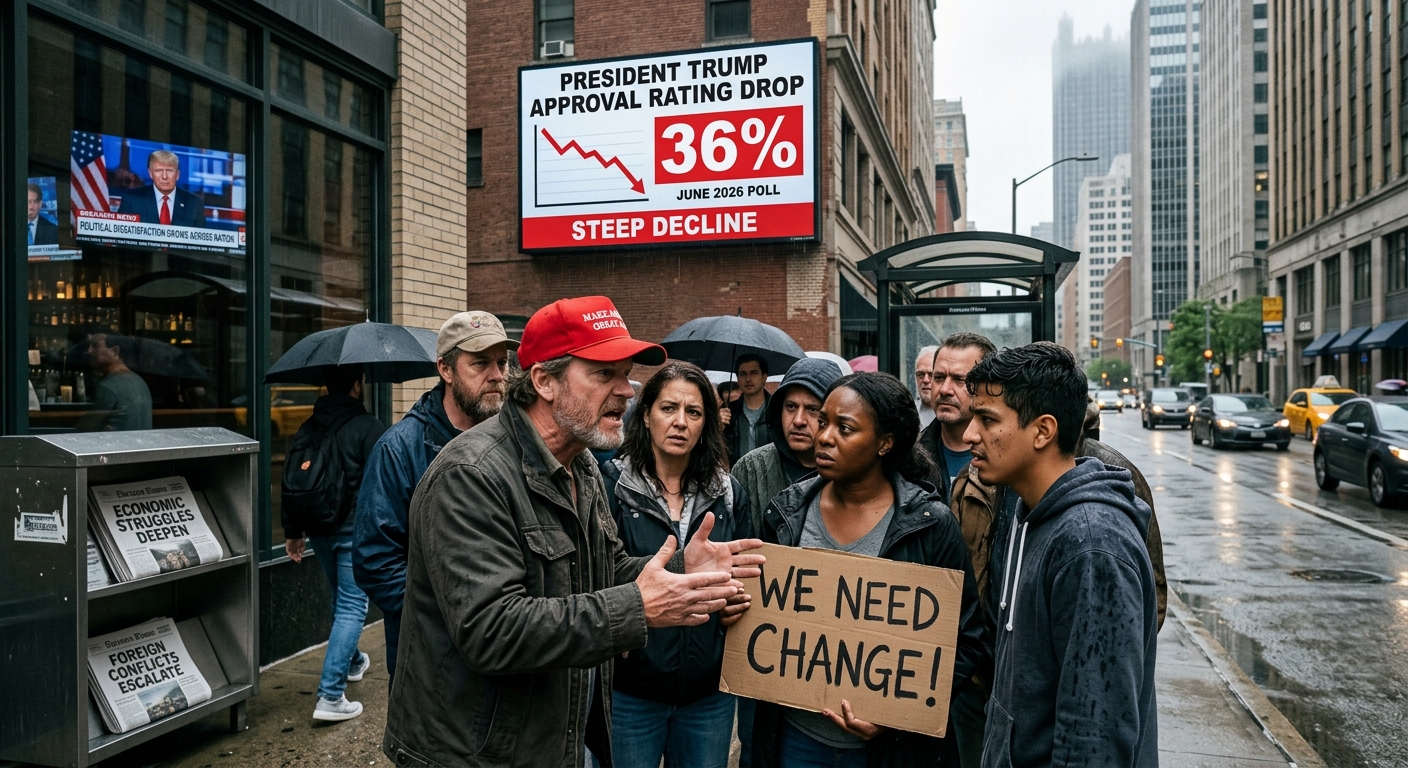
President Donald Trump’s approval rating has dropped to 36%, marking a notable decline from previous polls and positioning him at one of his lowest points in office. This downward trend is evident in dissatisfaction regarding his management of key issues, particularly the economy and the ongoing conflict with Iran. With these factors undermining his public support, it’s essential to consider how demographic divides contribute to this approval rating and the implications for his political future.
Demographic Influences
The latest NPR/PBS NewsHour/Marist poll reveals stark demographic divides in approval ratings. High disapproval rates among independent voters and women illustrate a polarization that complicates the Republican Party’s standing heading into the 2026 midterm elections. Discontent has increased notably across generations and educational backgrounds, suggesting that Trump’s current challenges are not merely a reflection of isolated voter dissatisfaction but a broader sentiment among various groups.
Poll Methodology Insights
This poll, conducted from June 8 to June 11, 2026, gathered responses from 1,340 U.S. adults through diverse methods. Using a combination of phone calls, text messages, and online surveys, it aimed for a representative sample reflective of the U.S. population. The poll’s methodology is designed to correct for demographic discrepancies, thus ensuring the accuracy of the reported approval figures.
Current Approval Trends
The findings indicate a concerning trajectory for Trump’s approval ratings, which reflect a consistent decline since March 2025. Key issues such as inflation and the ongoing conflict in Iran have notably contributed to this downward trend, with many Americans expressing dissatisfaction with Trump’s economic policies. Notably, independent voters and segments of his support base have shown significant disapproval, highlighting the vulnerabilities he may face in upcoming elections.
Political Implications
Trump’s approval rating decline portends significant challenges for the Republican Party as they approach the midterm elections. Voter sentiment indicates a preference for Democratic candidates amid dissatisfaction with Trump’s leadership. This shift not only complicates Republican efforts to retain their control in Congress but also reflects underlying societal tensions, as indicated by nearly 30% of the population suggesting that violent measures may be necessary for reforming the nation’s direction.
Challenges Ahead
The ongoing decline in Trump’s approval underscores substantial challenges for his administration, with criticism mounting regarding his policy effectiveness. The relative stability of approval ratings historically fluctuates with national events, but Trump’s current situation suggests more than a short-term issue. The interplay of economic difficulties and foreign policy decisions is shaping public opinion and influencing the Republican Party’s viability in the current political landscape.
The content is provided by Sierra Knightley, Anchor Press